In shortThe forecast at Milford Sound (Piopiotahi) is wet by default, with an annual average above 7 metres putting it among the wettest spots in New Zealand, which is why rain gear belongs in the bag in every season. Conditions turn over fast: cloud settles on the rock walls, then lifts into sunny gaps between fronts. Heavy rain is also what puts water down every gully on the sides, so keep the booking and sail anyway.
over 7 metresaverage annual rainfall
1,692 mMitre Peak above the water
May to Novemberroad hazard window
from NZ$1891 hour 45 minute sailing
Weather in Milford Sound and what the rain actually means
Rain is the baseline condition. The official destination site puts the annual average above 7 metres, which makes this one of New Zealand's wettest places and the reason rain gear is listed as a year-round item rather than a winter one. That average is spread across all twelve months, so there is no dry season to aim for and no month where a jacket becomes optional.
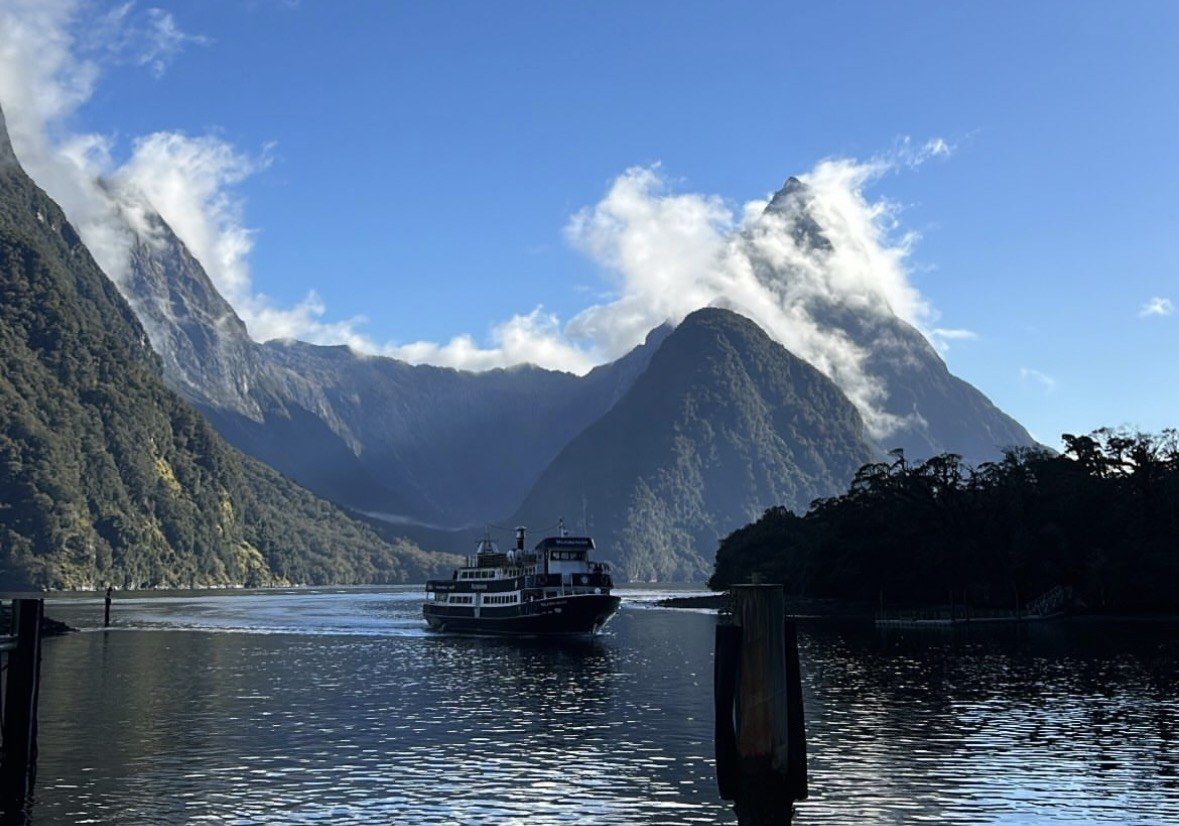
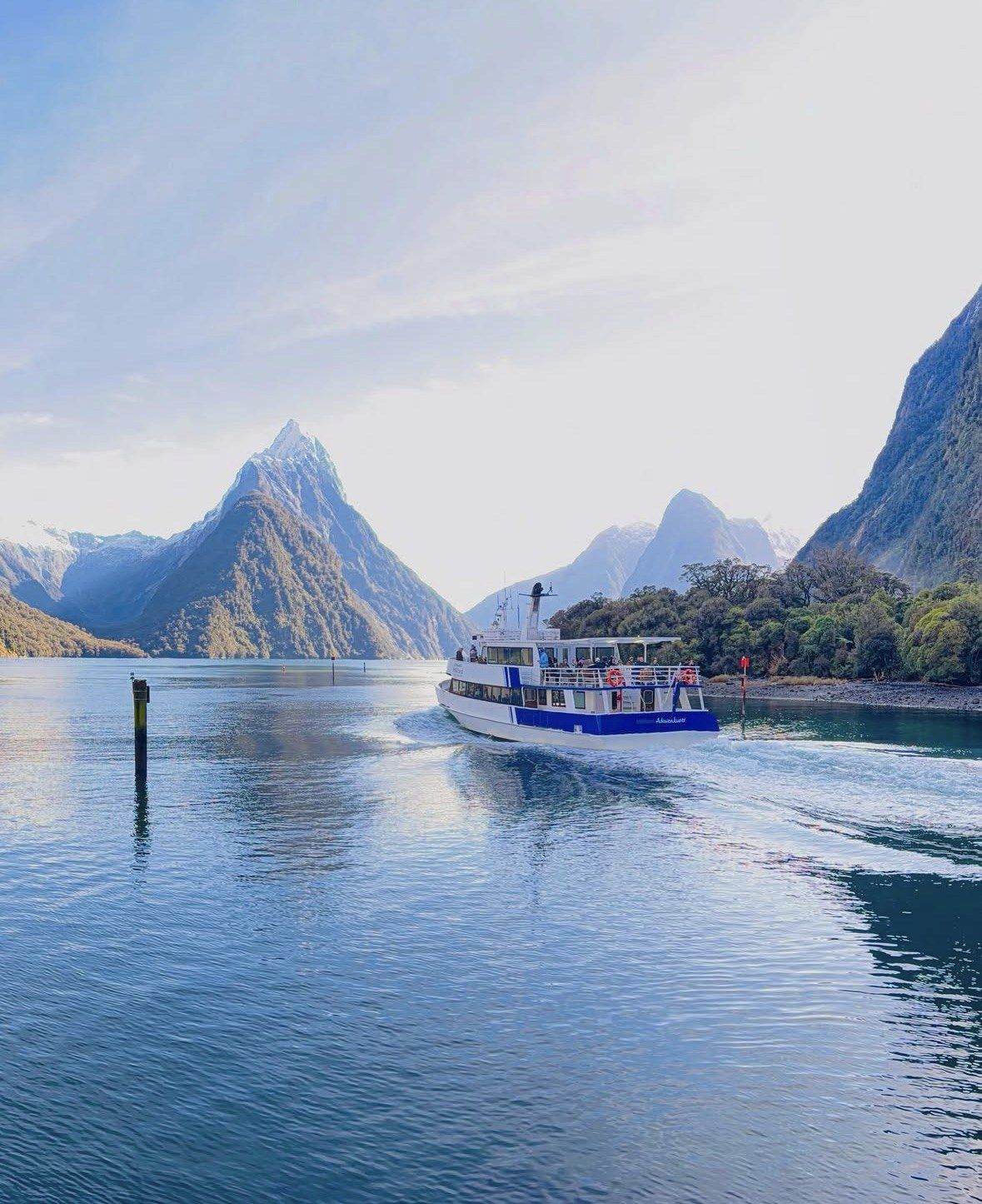
The pattern matters more than the total. Fronts come in off the Tasman Sea, cloud drops down onto the walls until the tops disappear, and then it lifts again for an hour of flat light or full sun before the next band arrives. Mitre Peak stands 1,692 m straight out of the water, with the glacier-carved sides continuing to depths of up to about 265 m, so you are standing in a corridor with very high walls where cloud has very little room to move sideways. It is normal to start a sailing in drizzle and finish it with the sun on the rock.
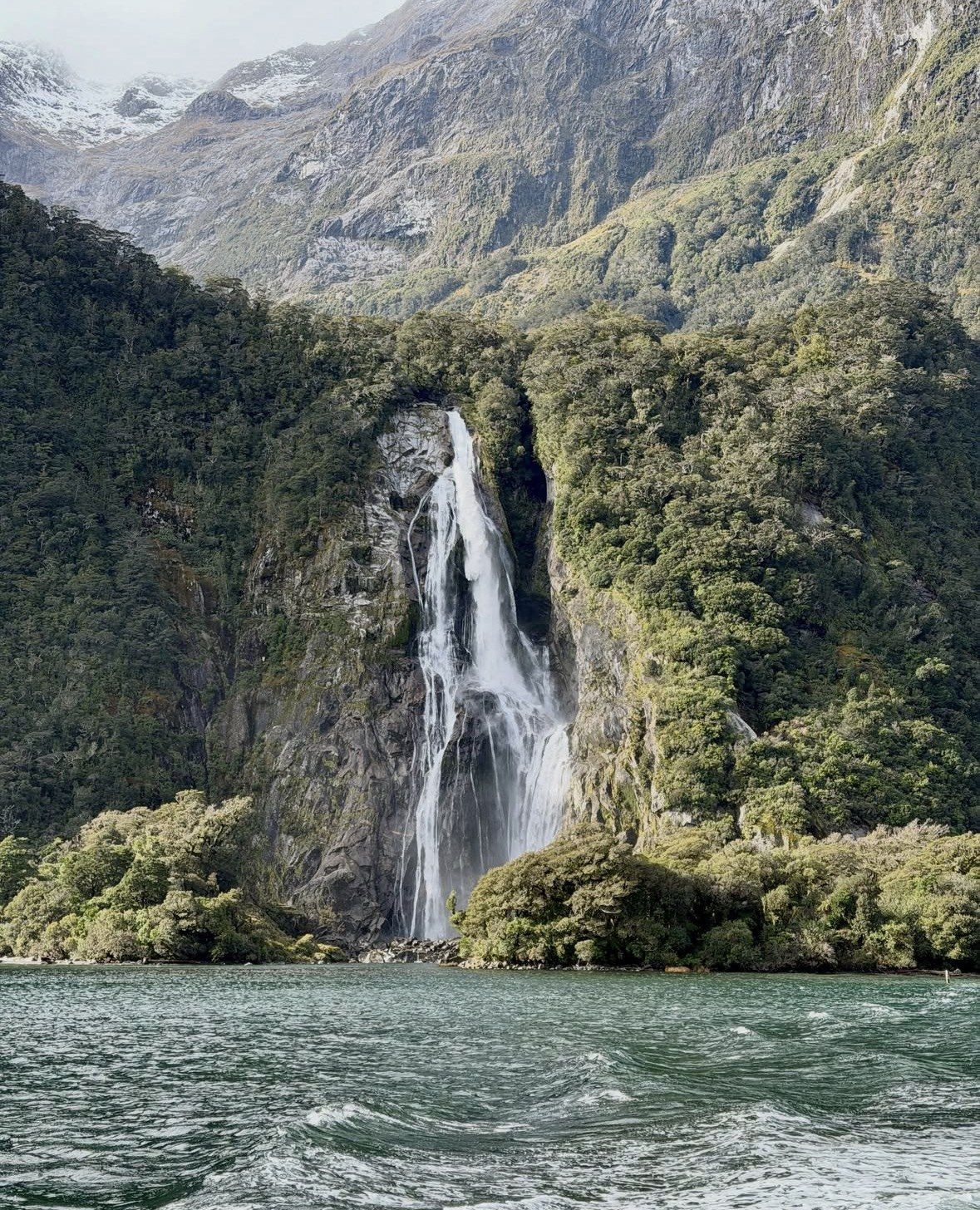
A wet forecast tells you what the fiord will look like on the day, so keep the booking. Water on the walls is the direct product of rain, and the volume coming down the sides on a wet morning is the thing most people remember. If you want the wet-day version in more detail, the rain page on this site covers what a soaked morning looks like from the wharves.
What the weather means once you are on the boat
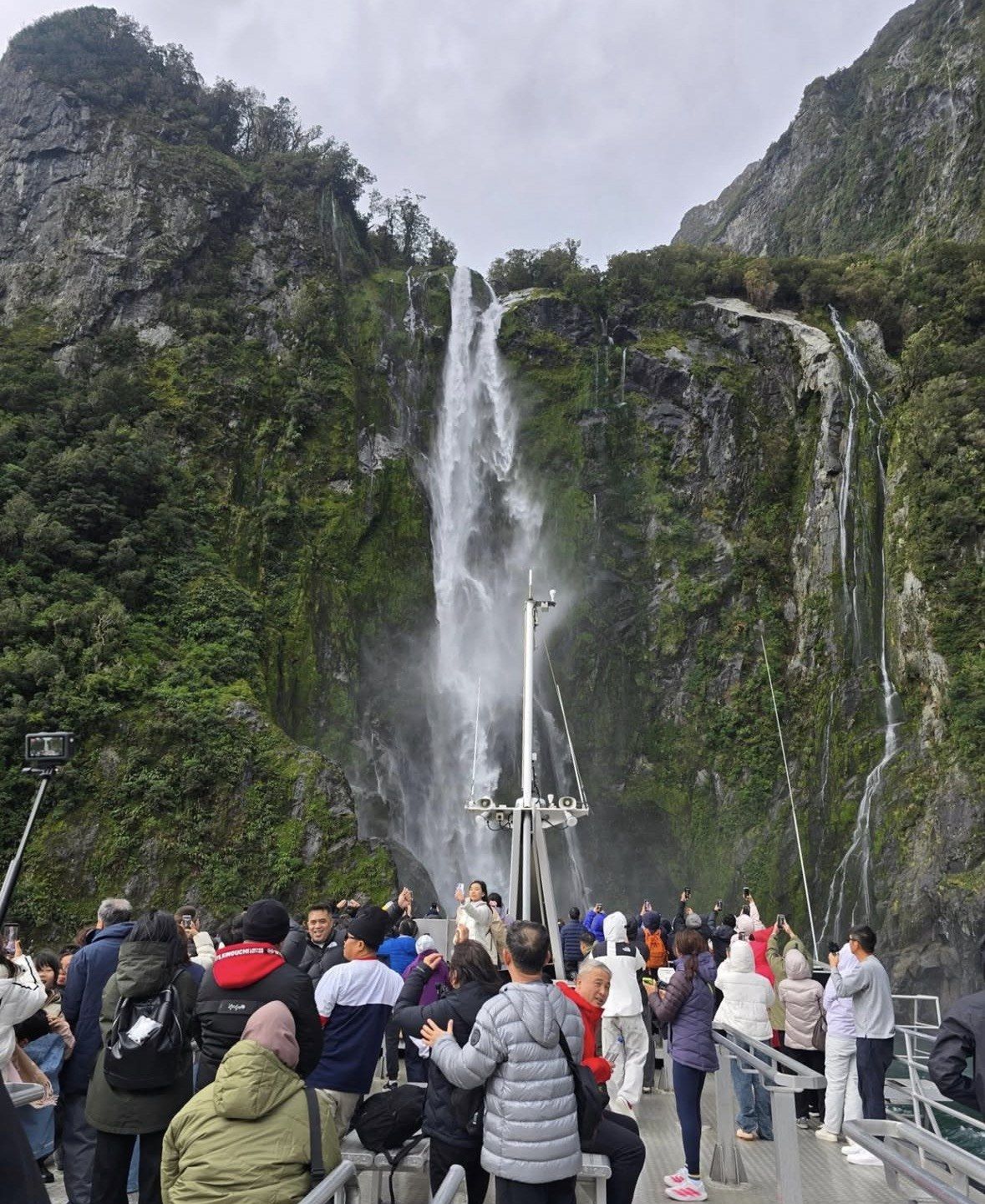
Dress for standing still outside in wind, because that is where the waterfalls are. A hard shell beats an umbrella: the gusts funnelling down the fiord will destroy an umbrella and soak you anyway. Plan on moving between shelter and the rail through the sailing rather than committing to one or the other, and expect it to feel noticeably colder on the water than it did in the car park.
The sailing listed here is the Small Boutique Cruise Experience, 1 hour 45 minutes, from NZ$189 and rated 4.9 (3,254 reviews). It runs every day of the year apart from Christmas Day, which tells you how routine wet weather is for the operators, and coffee, tea and biscuits are included on every departure. Nothing to eat is sold on board, so have a proper meal before check-in; a cold, wet hour and three quarters on deck is harder on an empty stomach. Cancellation is free up to 24 hours before the scheduled departure time.
For a long wet evening on the water there is the Milford Sound Mariner Overnight Cruise, 2 days from NZ$1,398, rated 4.7 (167 reviews), with private cabins with en suite bathrooms, dinner, breakfast and the use of kayaks or tender boats. These overnight sailings are sold on final-sale terms, so book them when you are confident about your dates. The packing page on this site has the full clothing list, including what to carry if you are kayaking in rain. Prices here are in New Zealand dollars.
The sailing that runs in the rain
This boutique sailing lasts 1 hour 45 minutes, is priced from NZ$189 and holds a rating of 4.9 (3,254 reviews). Departures happen every day of the year bar Christmas Day, coffee, tea and biscuits are included on board, and cancellation is free up to 24 hours before departure.
★ 4.9/5 · 3,254 reviews
Milford Sound climate and temperature by month
Official sources describe the year in two blocks rather than month-by-month averages. On DOC's split, the Milford Road's busy season runs October to April, with winter covering May to September, when the surface can be snow-covered and icy and snow chains may be required. Rain sits across both blocks, and so does the need for a windproof outer layer.
What changes with the season is the road and the number of coaches, while the rain stays steady across the year. Use the table below to decide which risks apply to your dates.
| Period | What the official sources say | What it changes for you |
|---|
| Any month | Rainfall averaging over 7 metres a year, rain gear needed in any season | Pack a hard shell and book regardless of the forecast |
|---|
| October to April | The Milford Road's peak months in DOC's seasonal split | Traffic signals at the single-lane Homer Tunnel in the peak, with waits of up to 20 minutes in each direction; Milford Sound Tourism suggests driving before 8am or after 11am |
|---|
| May to September | DOC's winter; road can be snow-covered and icy, chains may be required | Carry chains and know how to fit them, or let a coach operator take the driving |
|---|
| May to November | Avalanche, rockfall and landslide risk on the highway, with the Milford Road Alliance watching it 24 hours a day | Check road status on the day before you leave Te Anau |
|---|
Why a Te Anau or Queenstown forecast does not describe the fiord
The weather here is notoriously localised, as scenic flight operators put it: the fiord can be closed in while the rest of the region is clear, and the reverse happens just as often. Between Te Anau and the water there are 120 km of State Highway 94, about two hours without stops, and the Homer Tunnel at 945 m above sea level. Coach passengers out of Queenstown sit through about five hours in each direction, crossing several weather zones on the way in. Whatever the app shows for your hotel is describing a different side of a mountain range.
Anything flying is the exception worth planning around. Scenic flights are weather dependent and routes or landings may change at the pilot's discretion, so a flight-based day has a real chance of being reshaped by cloud. A boat sails in conditions that would ground an aircraft.
Build the morning so that bad visibility does not also cost you the departure. Signal on the Milford Road is patchy at best, with phones at Knobs Flat, the Homer Tunnel for emergencies and Milford Sound itself, so your road and weather check has to happen before you pull out of town. Halfway up the valley there will be nothing to look it up on. Fill the tank in Te Anau too, because nothing between there and the fiord sells petrol.
When to move a booking, and when to just go
Rain, wind, low cloud and a grey radar screen are all reasons to go. With an annual average above 7 metres, waiting for a clear slot usually means not sailing at all, and the days people describe as the best are often the wet ones. Wear the shell, accept wet hair, stand outside anyway.
The one forecast element that should move your plans is the road. From May to November the Milford Road can close or require chains, and if the highway is affected you have a transport problem rather than a weather problem. The day tours listed on this site allow free cancellation up to 24 hours before the scheduled departure time, so make that call the afternoon before, based on road status rather than rainfall. Overnight sailings are final sale.
The practical move for almost everyone is to sleep in Te Anau, drive the 120 km in the morning and take an early departure. That gets you parked before the late-morning coach wave, and it gives you the whole afternoon to stop on the way back if the cloud lifts.
Questions people ask
Does it always rain in Milford Sound?
Close to it, by the standards of most places you have visited. The annual average is above 7 metres, which is why the official destination site says rain gear is needed in any season. What you get on a given day is usually a mix: bands of rain, low cloud on the walls, and gaps of clear sky in between.
Will my cruise still run if the weather is bad?
Boats operate in rain and wind as a matter of routine. The boutique sailing listed here departs every day of the year apart from Christmas Day, and it allows free cancellation up to 24 hours before the scheduled departure time if you decide to move your plans. Flights are the weather-sensitive option, since routes and landings can change at the pilot's discretion.
How cold does it feel on the water?
Colder than the air temperature suggests, because of wind coming down the fiord and spray near the waterfalls. Layers plus a windproof, waterproof outer shell handle it in any month. Gloves and a hat are worth having from autumn onwards, especially if you want to stay on deck for photographs.
Is winter a bad time to visit because of the weather?
Rain falls in much the same way all year; what shifts in winter is the state of the road. In DOC's terms the Milford Road's winter covers May to September, when the surface can be snow-covered and icy and snow chains may be required. The hazard window for avalanches, rockfall and landslides is wider, May to November, and the Milford Road Alliance monitors the highway around the clock through it. If you are travelling then, consider handing the driving to a coach or small-group operator.
Can I rely on the forecast for my hotel in Queenstown or Te Anau?
No. The fiord sits on the other side of an alpine pass, 120 km from Te Anau and about five hours by coach from Queenstown, and its weather is notoriously localised. Check the road status rather than the rain radar, and remember mobile coverage on the Milford Road is very limited once you have left town.
Read also