In shortYes, for most visitors. Mitre Peak's summit sits 1,692 m above the water, the same rock keeps falling away to about 265 m below it, and rainfall averaging over 7 metres a year keeps the walls running with waterfalls. It stops being worth it when you drive 600 km from Queenstown and back in one day. Sleep in Te Anau and sail early.
1,692 mMitre Peak above the water
265 mDepth at the deepest point
over 7 mRain in an average year
from NZ$1891 hour 45 minute sailing
What to expect in Milford Sound
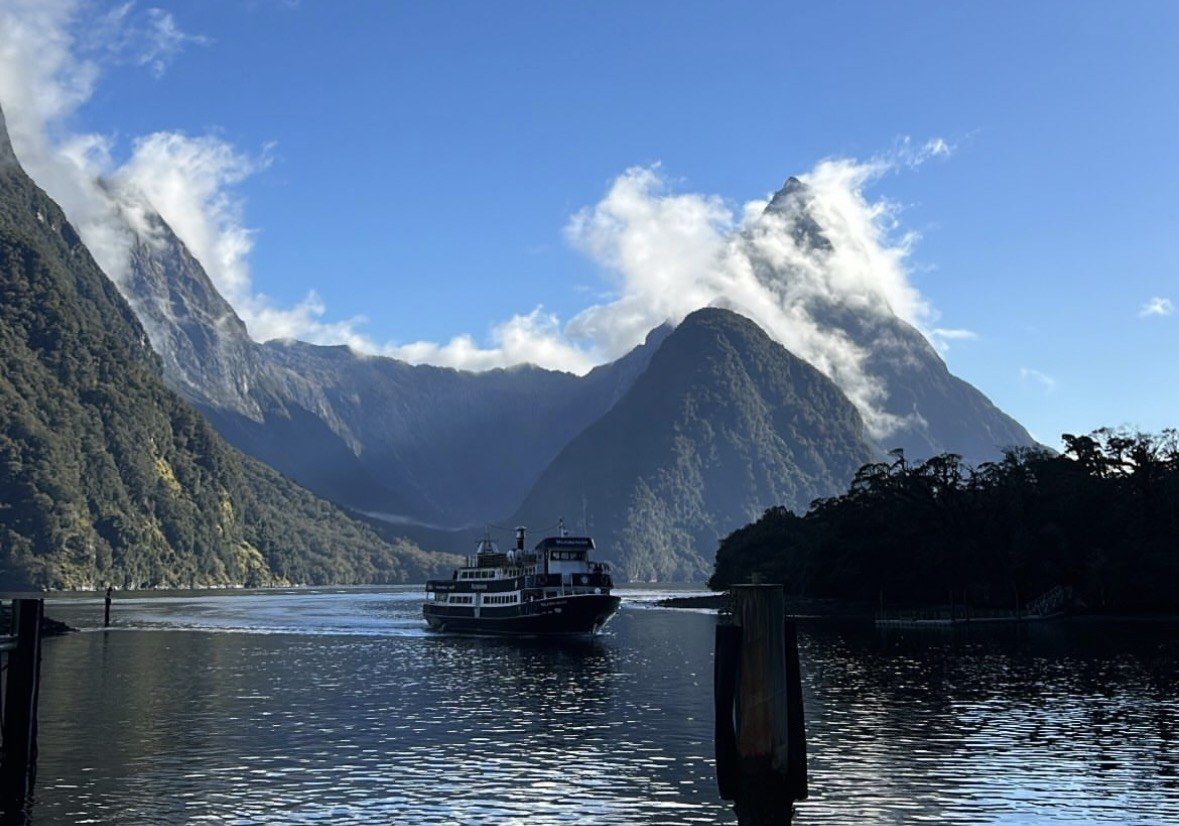
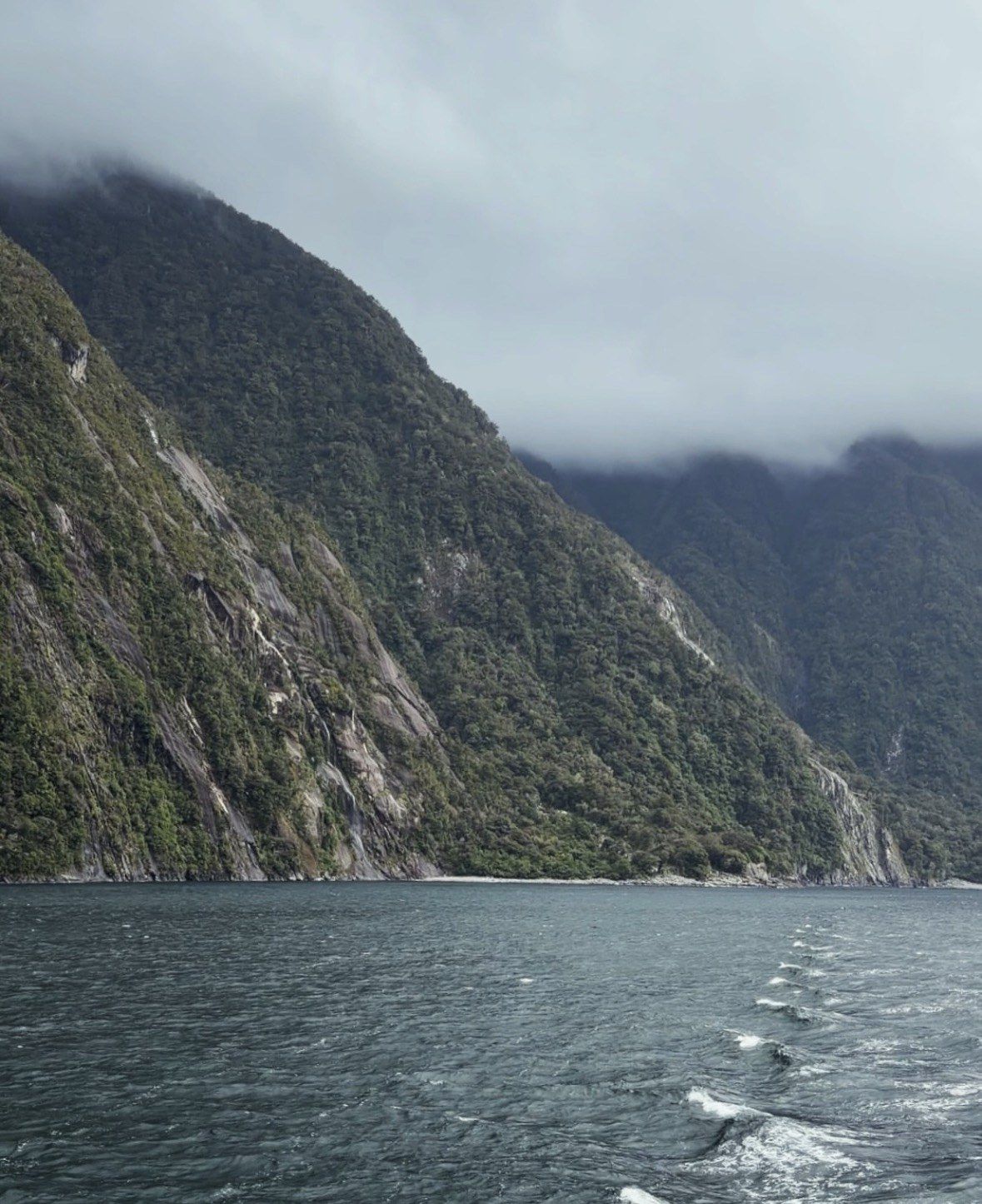
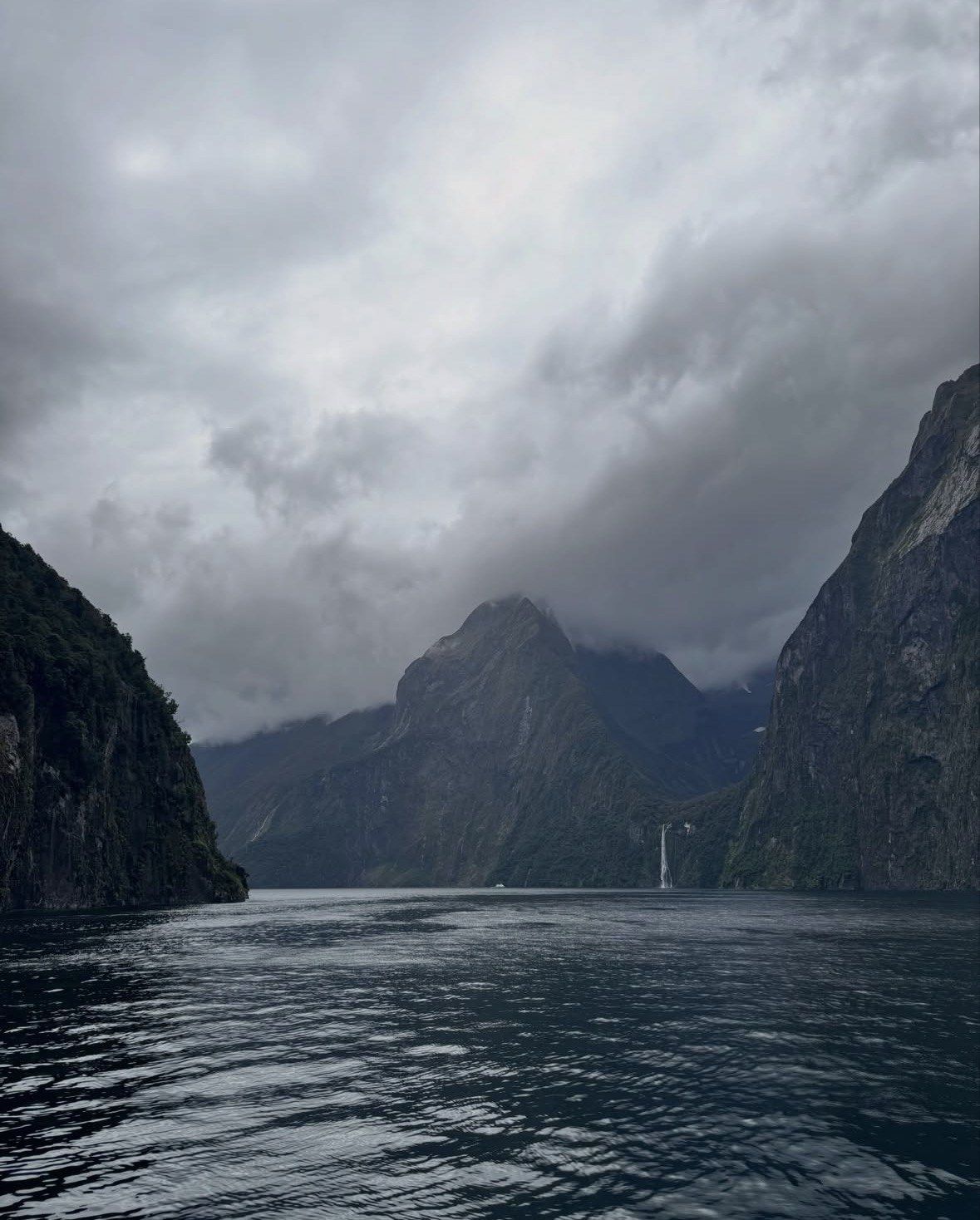
Scale is the first thing that registers from the deck. Mitre Peak's summit stands 1,692 m over your head, and the same glacier-cut rock carries on under the hull to around 265 m at the fiord's deepest. Nothing tapers off at the waterline, which is why photographs taken from the road never match the view from a boat.
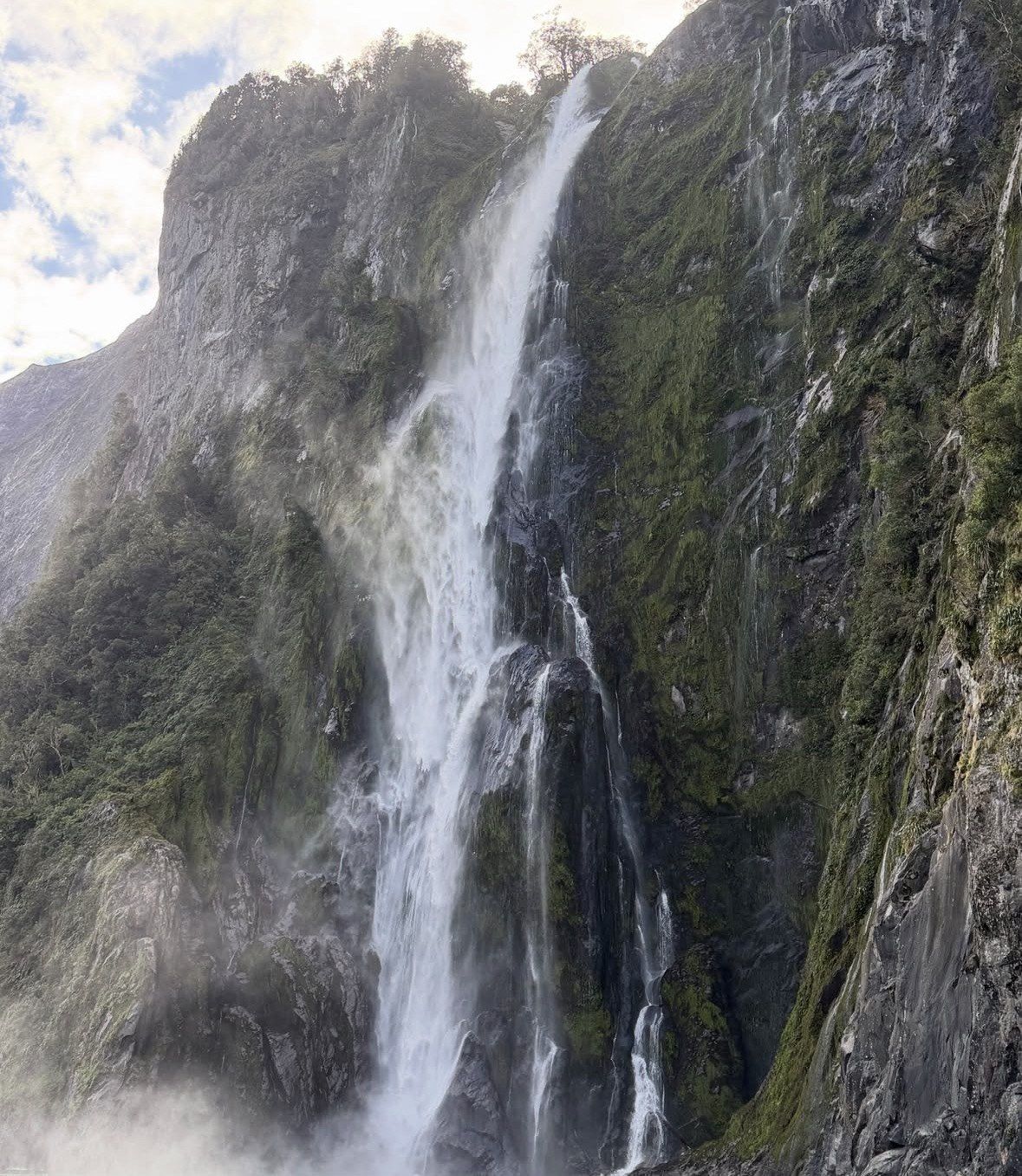
Rain is the second thing. More than 7 metres falls here in an average year, and a soaking sailing puts hundreds of short-lived falls on the faces alongside the permanent ones. Dry, still days give you reflections; wet days give you water coming off the rock in every direction.
Because the walls drop straight in and the water stays deep right up against them, the boats work close to the rock rather than tracking down the middle. Every day sailing covers the same stretch, the 16 km that DOC protects as the Piopiotahi (Milford Sound) Marine Reserve, and some run on to the mouth where the fiord opens to the Tasman Sea.
Wildlife is a bonus rather than a guarantee, and it follows a calendar.
- New Zealand fur seals hauled out on the sun-warmed ledges at Seal Rock, seen year-round
- Bottlenose dolphins and kea, also year-round; dusky dolphins turn up occasionally near the entrance
- Tawaki, the Fiordland crested penguin, if you sail between July and December: the chicks reach fledging age at about 75 days, which falls in late November or early December
- Humpback whales, rarely, in October and November
- Keep your distance under DOC's rules: no approaching seals, dolphins or penguins, and any close encounter has to be the animal's own idea
The parts people underestimate
Where visitors come away saying Milford Sound is overrated, it is usually the day they built rather than the fiord. The commonest version is a self-drive round trip from Queenstown: 600 km and 12 to 14 hours on the road, for a sailing of under two hours. Te Anau is the base DOC recommends for exactly that reason.
The midday wharf is the second complaint. The fiord now handles over a million visitors annually, a long way up from the 883,000 DOC counted in 2018 and the roughly 437,000 of 2012. Milford Sound Tourism Limited, which manages the harbour, the wharves, the terminal and the car parks, puts the fix bluntly: drive the road before 8am or after 11am, or sleep somewhere near the fiord. Sailings in the late-morning and early-afternoon slots are the ones that fill with arriving coach passengers.
Add the arrival buffer and the schedule tightens further. MSTL's own planning figure is up to 45 minutes to find a space, then about 15 minutes on foot to the Visitor Terminal, before whatever check-in your booking requires. Most people who miss a prepaid sailing lose it in that last hour, between the car park and the counter.
Weather is a genuine lottery, in both directions. The fiord's weather is localised enough that it can be closed in while the rest of Fiordland is clear, scenic flights go only when conditions allow, and between May and November State Highway 94 can shut or call for snow chains because of avalanches, rockfall and landslides. Rain itself is not a reason to rebook; a closed road is.
Milford Sound is worth the drive from Queenstown only with a spare day
Do not drive it yourself from Queenstown and back in a day. That is 600 km of return driving and 12 to 14 hours, on a mountain highway where the last fuel is in Te Anau, phone signal mostly disappears, and the single-lane Homer Tunnel runs on traffic signals in the summer peak that can cost you 20 minutes in each direction.
If Queenstown is where your hotel is and the itinerary has one day going spare, hand the driving to a small-group operator and treat the road as part of the trip. If you can move your base, move it: a night in Te Anau turns the same cruise into a manageable day and puts you at the wharf before the coaches.
- From Te Anau: 120 km one way, about two hours if you do not stop, and DOC's budget for the whole 240 km day, scenic stops and a short walk and a cruise included, is around eight hours
- Self-drive from Queenstown: 12 to 14 hours for a 600 km return, the reason DOC steers visitors toward a Te Anau base
- Queenstown by coach: about five hours in each direction, with pickups at 6:30am or 7:00am on the small-group day, so the early start happens either way
Queenstown, fully guided, 13 hours
Keeping Queenstown as your base means someone has to do the driving, and this small-group day does it for you: 13 hours covering the road stops and the cruise, from NZ$369, rated 4.9 (3,757 reviews), with a picnic lunch, pickups at 6:30am or 7:00am and booster seats for children aged 7 and under.
★ 4.9/5 · 3,757 reviews
Four changes that make the day work
Sleep closer. Te Anau cuts the driving to 120 km each way and lets you be parked and checked in before the late-morning wave arrives. From Queenstown, the equivalent fix is a fully guided small-group day so the five hours each way are someone else's problem.
Travel outside the peak window. Take the road before 8am or after 11am, as the terminal operator advises, and pick a sailing at either end of the timetable rather than the middle of the day.
Choose the boat deliberately. Capacity is the real difference between day cruises, since every vessel covers the same protected 16 km. A boutique sailing of 1 hour 45 minutes gives you deck space for photographs and an easy walk back to the car park afterwards; a large vessel makes more sense in foul weather or with small children who need indoor room.
If you want more than a day boat, there are two directions to go. An overnight sailing keeps you on the fiord after the day fleet has left. A fixed-wing leg between Queenstown and Milford Sound takes about 40 minutes against roughly five hours by coach, which buys back most of the day, with the understanding that aircraft go only when the weather allows.
The tours on this site, compared
Deciding whether Milford Sound is worth it is really a choice between three shapes of day: a boat booked on its own if you are driving to the terminal, a guided day from Te Anau, or a guided day from Queenstown. Every figure in the table is a from price, in New Zealand dollars.
Make the call the afternoon before, with the road status and the forecast in front of you, then check both again on the morning itself. Timetables and conditions on the Milford Road change at short notice.
The recommendation: book a night in Te Anau, take a guided day or an early sailing, and accept rain as part of the deal. On the boat itself, pack a hard shell with a hood rather than an umbrella, and remember that the deck runs colder than the car park did.
| Tour | Starts from | Total duration | From | Rating |
|---|
| Small Boutique Cruise Experience | Milford Sound Visitor Terminal | 1 hour 45 minutes | NZ$189 | 4.9 (3,254 reviews) |
|---|
| Award Winning Milford Sound Full Day Tour & Cruise from Te Anau | Te Anau | 9.5 hours | NZ$315 | 5.0 (1,321 reviews) |
|---|
| Premium Milford Sound Small Group Tour & Cruise from Queenstown | Queenstown | 13 hours | NZ$369 | 4.9 (3,757 reviews) |
|---|
Questions people ask
Is a Milford Sound cruise worth it in the rain?
Yes. With an annual average above 7 metres, waiting for a dry window generally means you never get on a boat at all. Wet weather is what puts hundreds of temporary falls on the walls. Bring a waterproof jacket with a hood that pulls tight, because the one thing that spoils a wet sailing is spending it behind glass.
How much time should I leave between arriving and my sailing?
Budget what the terminal operator budgets: as much as 45 minutes to get parked, then about 15 minutes walking in, with check-in still ahead of you. Book the boutique sailing on its own and the parking is yours to settle, at NZ$10 per hour in the main car park, card only at the machines, which take no cash and print no receipt. The Cruise Milford counter sits inside the terminal building, second on the left.
How busy does Milford Sound get?
More than a million people visit each year, contributing about NZ$200 million to the regional economy by the Conservation Minister's figure. DOC's series shows 883,000 visitors in 2018, roughly double the 437,000 of 2012. The crowd is concentrated in the middle of the day, which is why the terminal operator advises being on the road before 8am or after 11am.
Can I fly a drone for photos over the fiord?
No. Drone flying is banned at Piopiotahi Milford Sound and across the whole of Fiordland National Park. The same applies to dogs, which have no access to any part of the park, the Milford Road corridor included, and feeding kea is banned too because it does the birds harm.
Does flying in make a bigger difference than a longer cruise?
It changes the length of the day more than the time on the water. Allow about 40 minutes each way in a fixed-wing aircraft between Queenstown and the fiord, where a coach needs roughly five hours for the same leg. Flights are weather dependent and the fiord's weather is localised, so it can be closed in while the rest of the region looks fine.
Read also