Milford Sound cruise: choose your boat and start point
Every sailing checks in at the Milford Sound Visitor Terminal, at the end of a single 120 km road from Te Anau. What changes your day is where you start from, what time you get on the water and how big the boat is.
One road in, one terminal, and rock walls that keep going well below the waterline. Where you start and which boat you take is up to you.
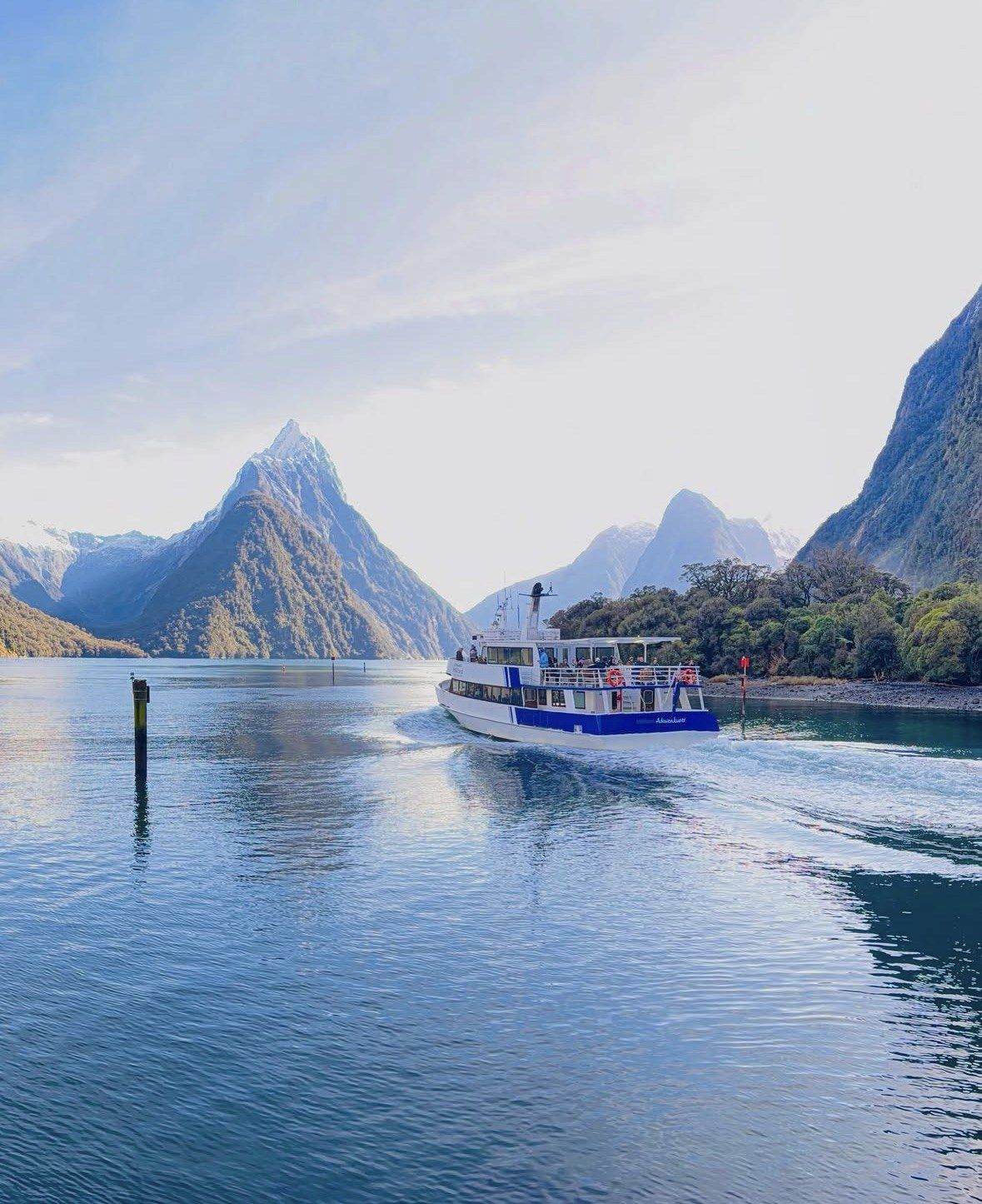
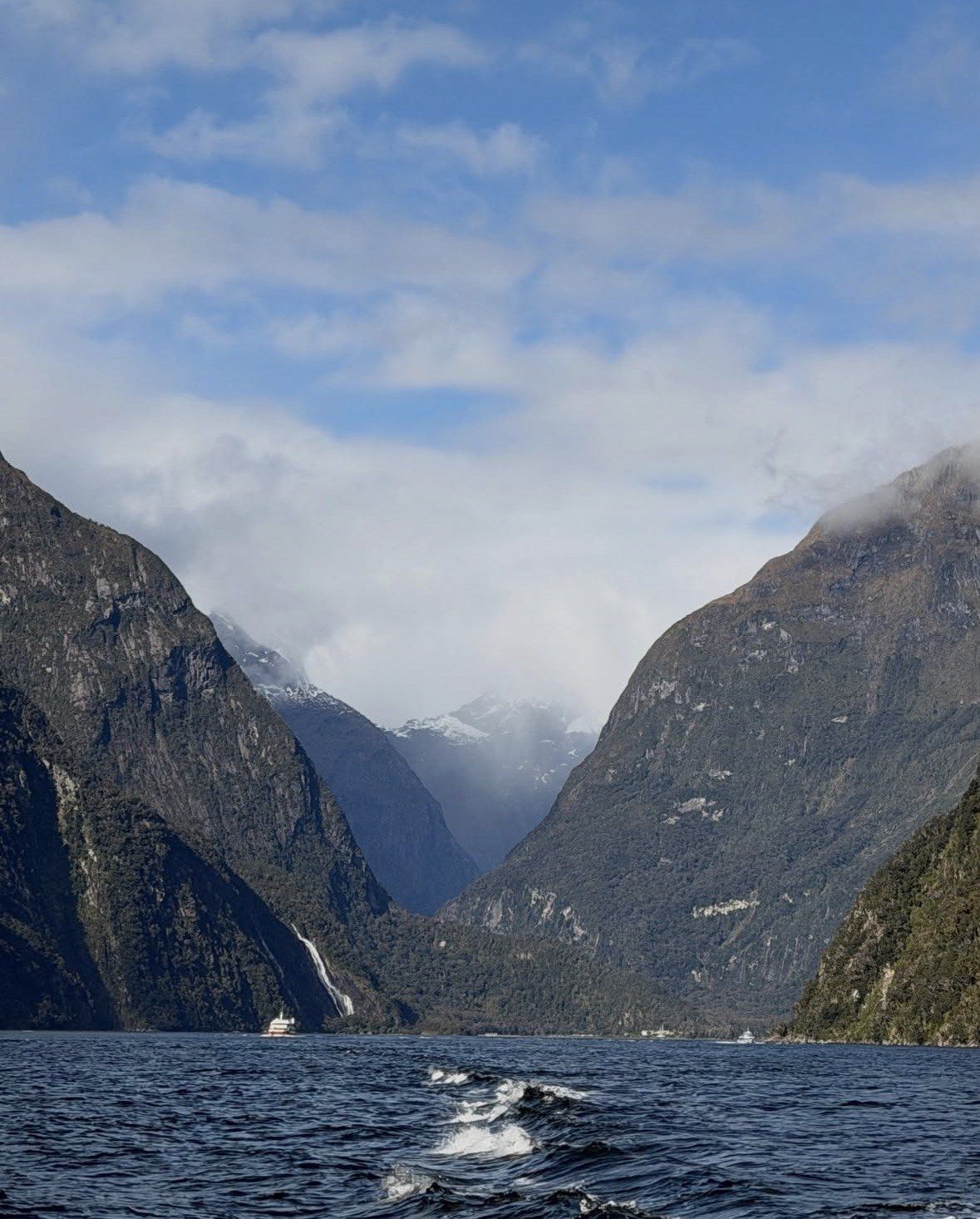
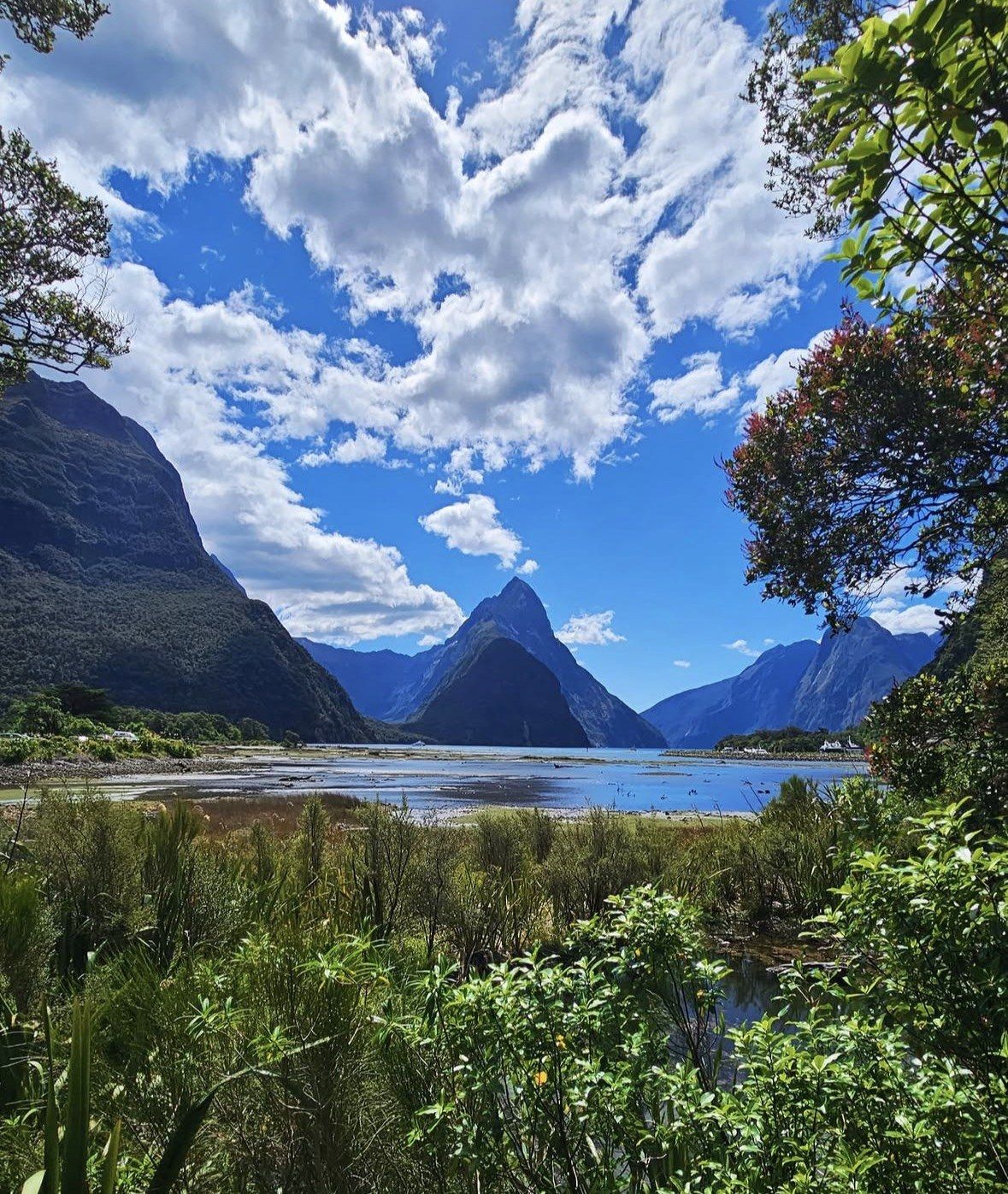
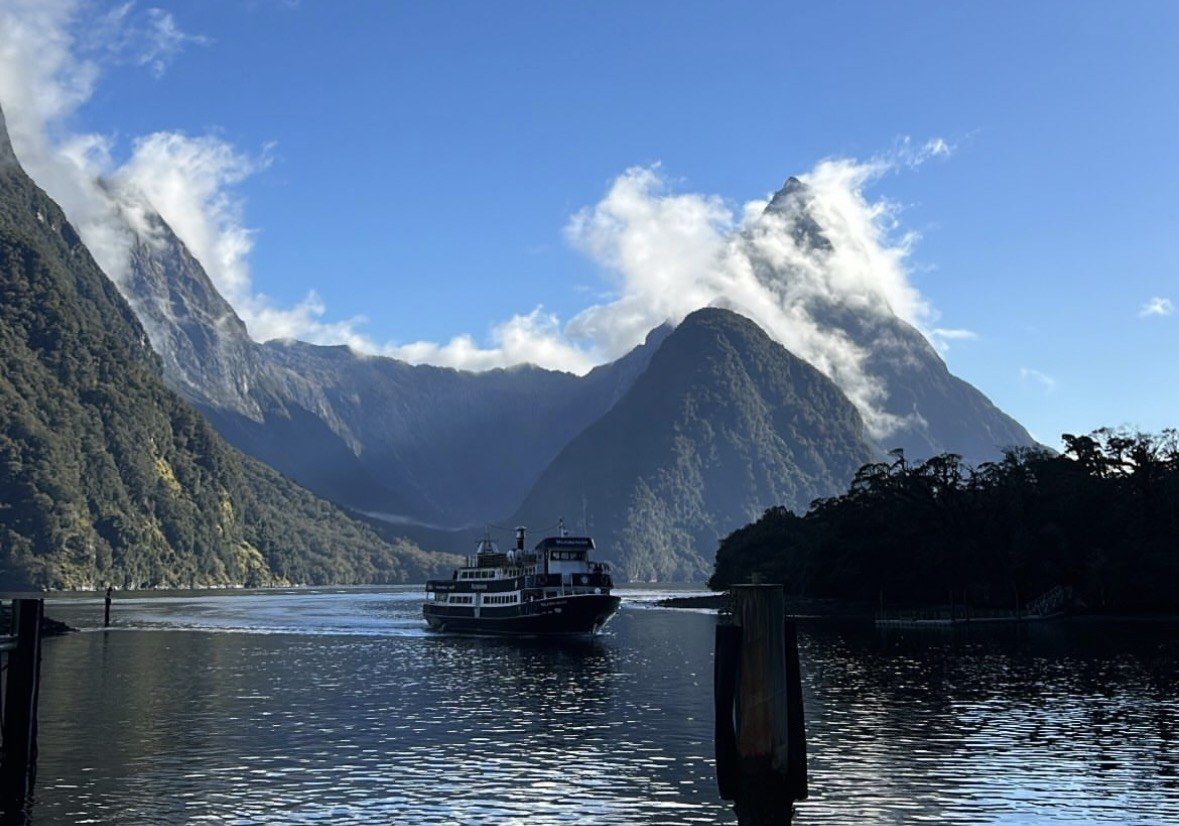
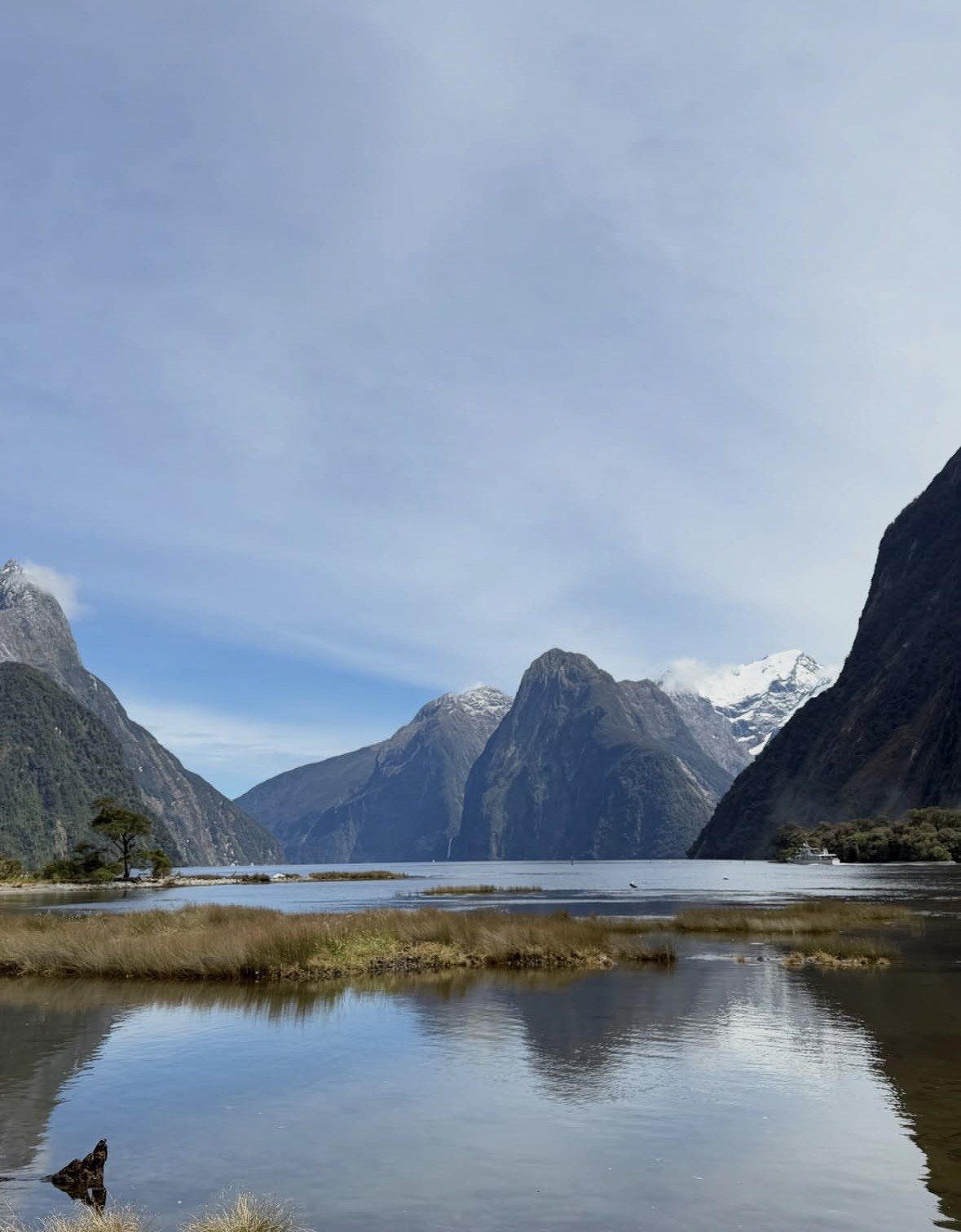
Milford Sound (Piopiotahi) sits at the end of State Highway 94 in Fiordland National Park, and that highway is the only road in, so every car, shuttle and coach arrives the same way. Mitre Peak rises 1,692 m straight out of the water in sheer rock walls, and the glacier-carved sides continue below sea level to depths of up to about 265 m. The harbour, wharves, Visitor Terminal and car parks are managed by Milford Sound Tourism Limited rather than by any single boat company. More than a million people come each year, contributing about NZ$200 million to the region.
Today's visitor set-up grew out of a 1991 Visitor Centre and a NZ$12m redevelopment that opened on 24 April 1992; the operating company took the name Milford Sound Tourism Ltd in 2016. Underwater, the Piopiotahi (Milford Sound) Marine Reserve was established in 1993, runs 16 km along the fiord and covers 690 hectares. In January 2026 the Minister of Conservation confirmed a long-term DOC concession letting Milford Sound Tourism keep running the terminal and car parks until 2050. After the Milford Opportunities Project masterplan in 2021 and its business case in June 2024, the government approved NZ$6.4 million from the International Visitor Conservation and Tourism Levy for visitor and infrastructure work, plus NZ$1.8 million for long-term planning.
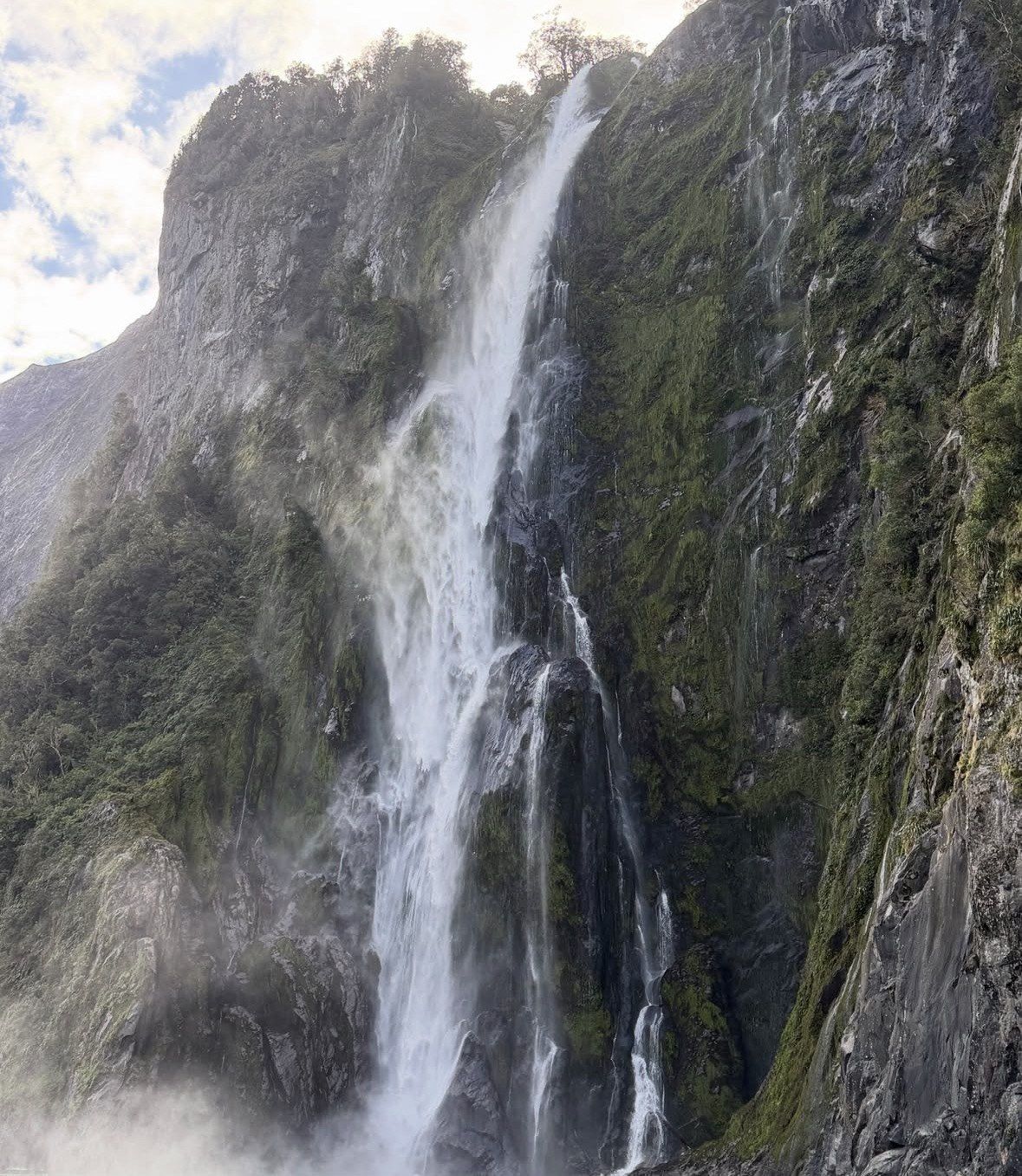
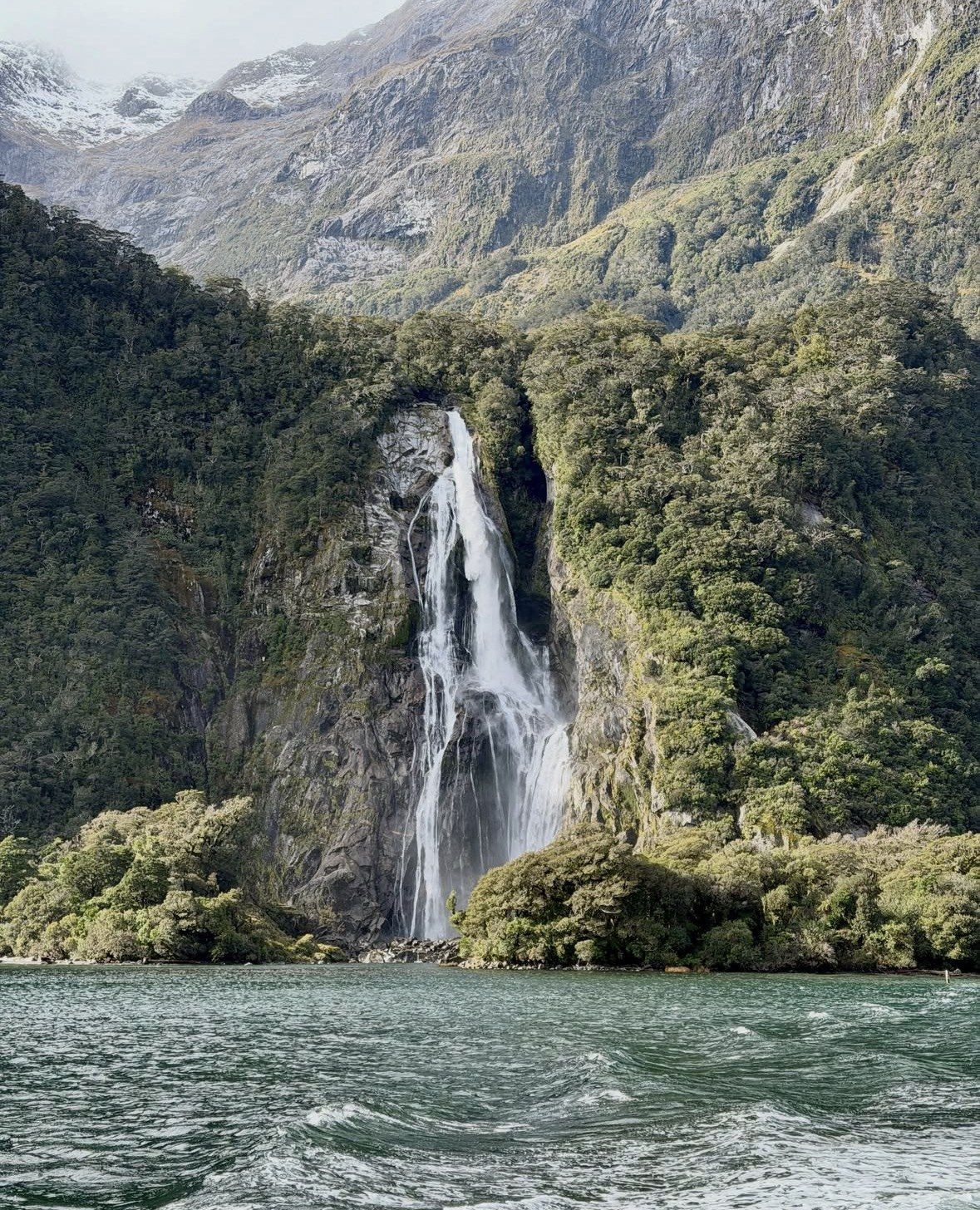
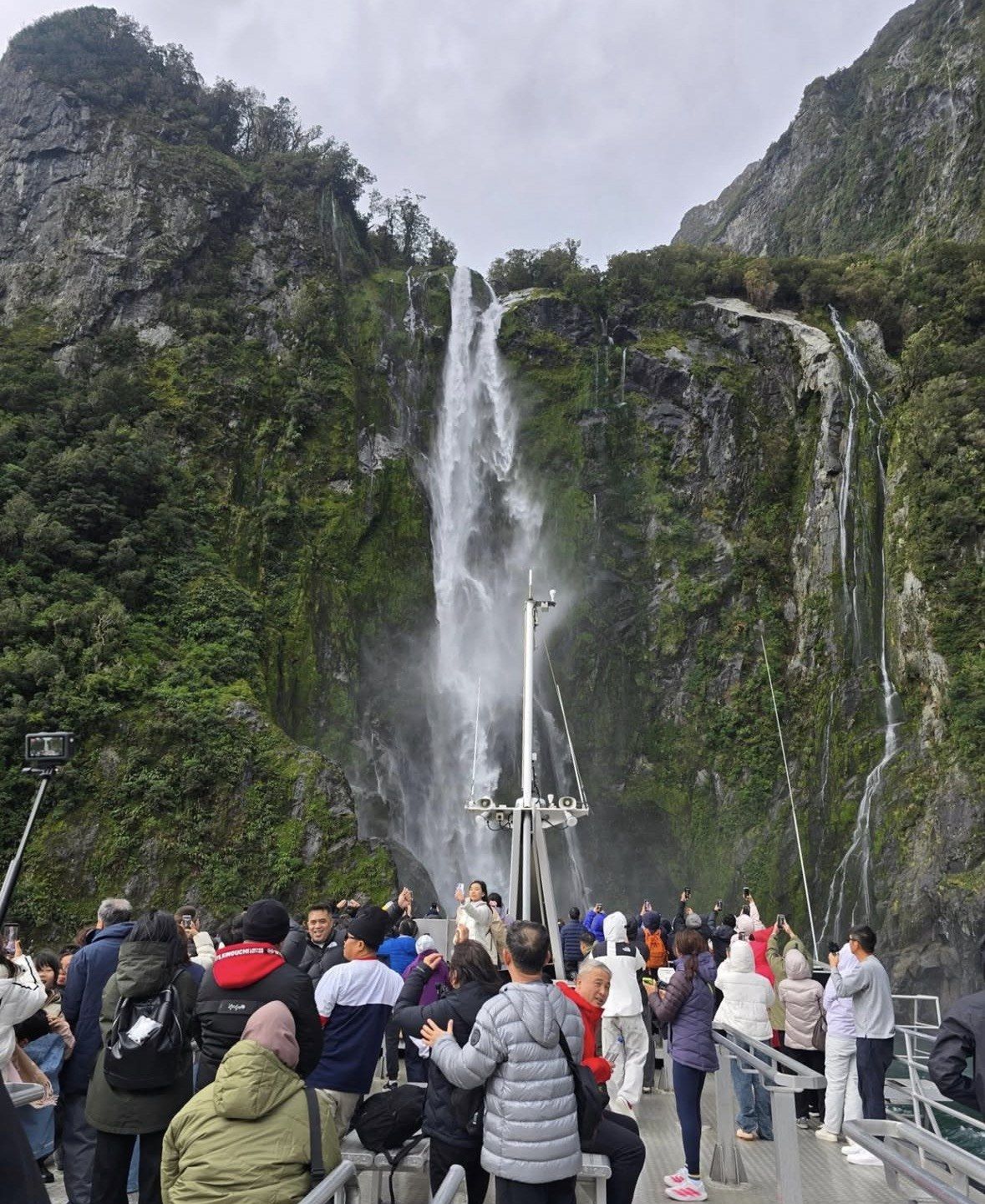
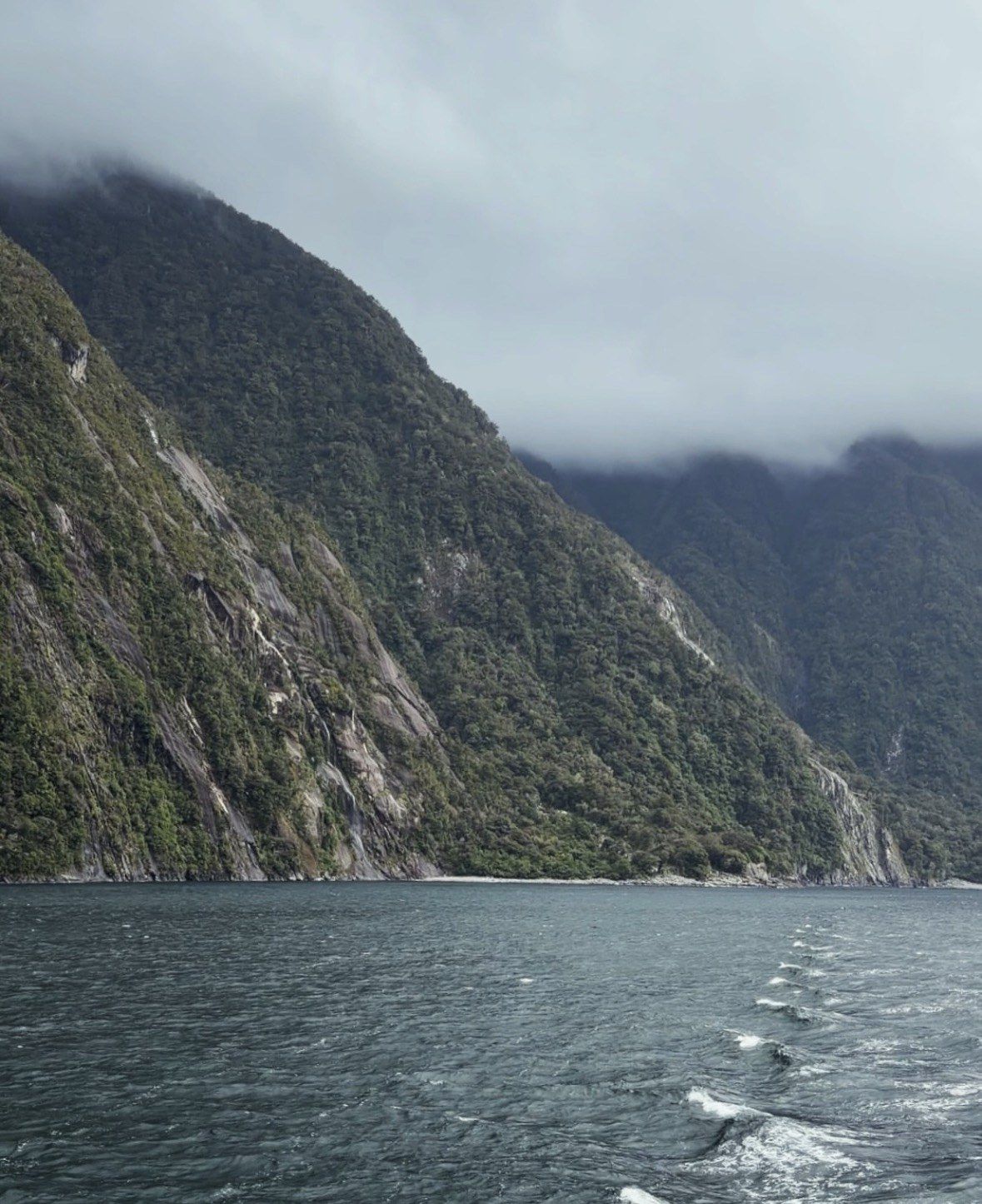
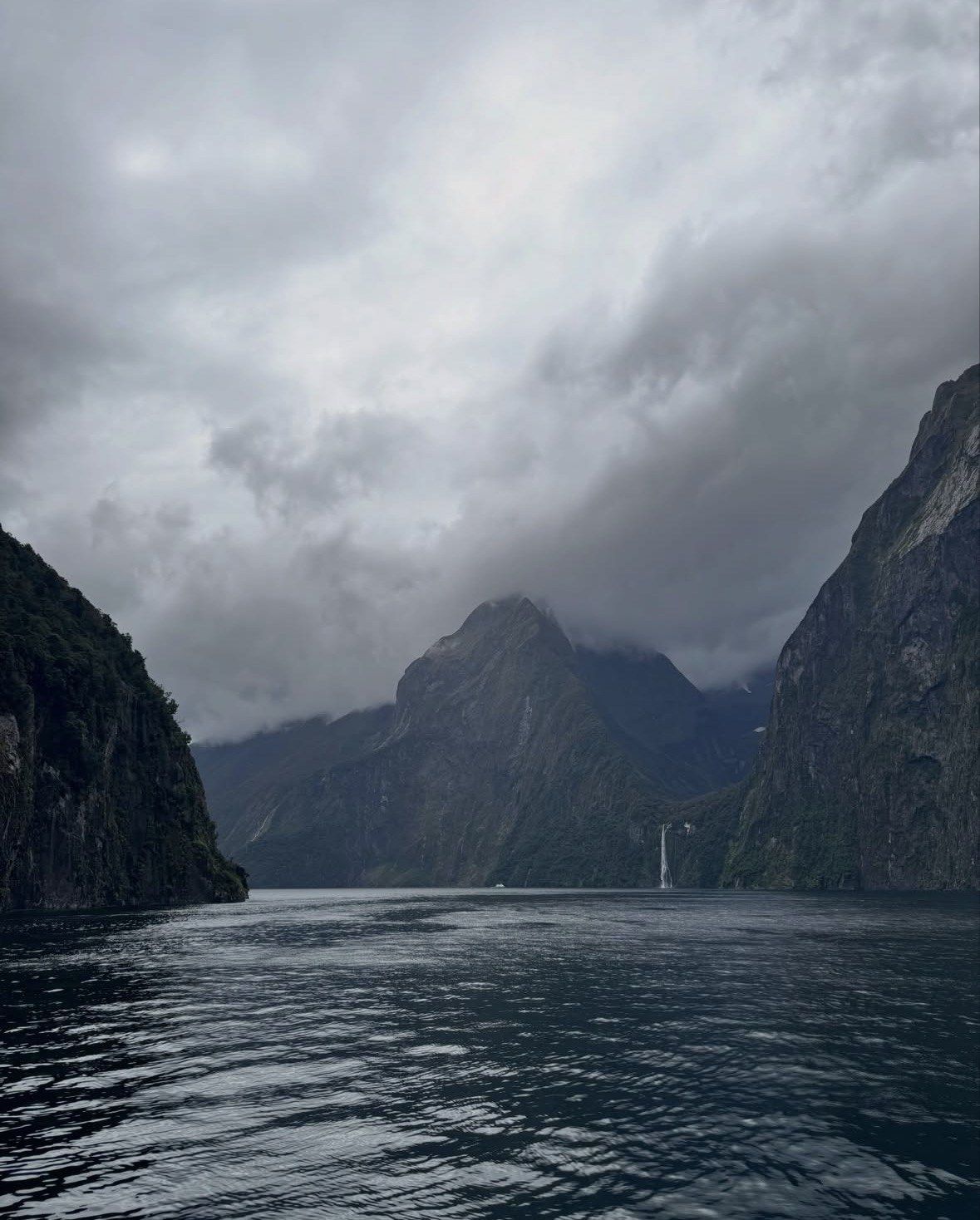
A day here is mostly logistics, then two hours that justify it. Boat-only sailings run 1 hour 40 minutes, 1 hour 45 minutes or up to 2 hours, all leaving from the terminal wharves, and check-in closes 20 to 30 minutes before departure depending on the tour. Rain is normal: the fiord averages over 7 metres a year, and that is when the temporary waterfalls appear on the walls. Fur seals, bottlenose dolphins and kea are seen year-round, with Seal Rock the ledge where the seals most often bask. Hot drinks come with most sailings; lunch only with the tours that list it.
Peak
Mitre Peak height1,692 m
Depth
Fiord depthup to about 265 m
Reserve
Marine reserve690 hectares, 16 km
Rain
Average rainfallover 7 metres a year
Road
Te Anau to the fiord120 km, about 2 hours
Price
Cruise-only tours fromNZ$143
Peak
1,692 m
Mitre Peak sets the scale
Mitre Peak rises 1,692 m straight out of the water in sheer rock walls, according to DOC. Those same walls carry on underwater to depths of up to about 265 m, which is why the fiord looks narrower than it is.
Reserve
690 hectares
A marine reserve since 1993
DOC manages the Piopiotahi (Milford Sound) Marine Reserve, which runs 16 km along the fiord and covers 690 hectares. Fiordland holds about 7 million black coral colonies, some up to 200 years old, growing as shallow as 10 metres where elsewhere in the world black coral sits at roughly 200 to 1,000 metres.
Water
40 metres
Life sits near the surface
Most marine life in the fiords is restricted to the top 40 metres of water, below a tannin-stained freshwater layer. That dark surface layer is what lets deep-water species live within diving range here.
Tunnel
1.2 km
The Homer Tunnel is single lane
Traffic signals control the Homer Tunnel in the summer peak and delays can reach 20 minutes each way, which is the main reason coach days build in slack. It runs 1.2 km, sits 945 m above sea level and is about 3.81 m tall, with a steep downhill gradient towards the fiord.
Distance
600 km
Queenstown and back is a long day
DOC puts the Queenstown round trip at 600 km and 12 to 14 hours, and suggests basing yourself in Te Anau instead. A coach from Queenstown runs about five hours each way, so the day tours from there start with pickups at 6:30am or 7:00am.
Concession
2050
Who runs the terminal
In January 2026 the Minister of Conservation confirmed a long-term DOC concession allowing Milford Sound Tourism Limited to keep operating the Visitor Terminal and car parks until 2050. Every boat company checks its passengers in at that one building.
Boat
A boutique short sailing
Small Boutique Cruise Experience runs 1 hour 45 minutes from NZ$189, rated 4.9 (3,254 reviews), with complimentary coffee, tea and biscuits and no food sold on board. Check in at the Cruise Milford counter, second on the left inside the terminal.
Clock
A full two hours on the water
Hot drinks are included on the 2-Hour Milford Sound Scenic Cruise, from NZ$179, rated 4.8 (1,646 reviews), run on a smaller boat with no charge for children under 3. Check-in is 30 minutes before and boarding closes 5 minutes before departure.
Coach
A coach day from Queenstown
From Queenstown, the Milford Sound Coach and Cruise tour runs 12 hours from NZ$275, rated 4.7 (973 reviews), with an air-conditioned coach, the sailing included and central pickup at the Athol Street bus stop. A premium version adds a glass-roof coach, lunch and a Nature Cruise of up to 2 hours, 12.5 hours from NZ$379.
Van
A small-group day with walks
Te Anau's Full-Day Milford Sound Tour with Cruise and Walks takes a maximum of 15 travellers for 9 hours from NZ$327, rated 5.0 (789 reviews), with guided and self-guided nature walks along the road and a small-vessel sailing. No children under 5.
Plane
Flying both ways
Flights in both directions cut the day to 4.5 hours on the Milford Sound Flight and Cruise Tour from Queenstown, from NZ$895, rated 4.9 (2,241 reviews), with a guaranteed window seat, a 1 hour 45 minute sailing and hotel pickup from selected central Queenstown accommodation. Flights are weather dependent and routes or landings can change at the pilot's discretion.
Night
Staying after the day boats go
Two days from NZ$1,398 on the Milford Sound Mariner Overnight Cruise, rated 4.7 (167 reviews), covers private en suite cabins, dinner, breakfast and use of kayaks or tender boats; these sailings are sold on final-sale terms. Smaller again is the Fiordland Jewel, 17.5 hours from NZ$1,449 for just 20 passengers a night, with a three-course dinner, kayaking and a top-deck hot tub.
How the fiord stacks up against the other Fiordland options people weigh against it.
Most people arriving in Fiordland have one spare day and a short list: the fiord itself, the harder-to-reach Doubtful Sound, the multi-day Milford Track, and the road stops between Te Anau and the coast. They differ less in scenery than in how much of your day they eat and how far ahead you have to commit. The table below sets a Milford Sound cruise against the alternatives on crowds, cost, who each one suits and what is genuinely different about it.
Crowds
Price
Best For
What Sets It Apart
★ Milford Sound
Over a million visitors a year, peaking midday when the coaches land; Milford Sound Tourism advises travelling the road before 8am or after 11am
Boat-only tours on this site from NZ$143; coach days from NZ$275; flights from NZ$895
Anyone with one day and a Te Anau or Queenstown base
Mitre Peak rising 1,692 m with walls dropping to about 265 m, reached by sealed road to a single terminal
Doubtful Sound
Access is capped by a 45 to 60 minute Lake Manapouri crossing and a 45-minute coach over gravel Wilmot Pass
Not among the tours listed on this site
Travellers with a spare day who are based at Te Anau or Manapouri
New Zealand's deepest fiord, described by operators as three times longer and ten times larger than Milford Sound, with about 40 km of waterways
Milford Track
Hut bookings cap numbers through the Great Walks season, 1 November 2026 to 30 April 2027
Not among the tours listed on this site
Walkers with four days and bookings made well in advance
A one-way walk that finishes with a boat ride into the fiord, starting from the Te Anau Downs boat transfer about 30 km from Te Anau
Te Anau and the Milford Road
Roadside stops are quietest before 8am and after 11am; the Hollyford junction to The Chasm stretch is a no-stopping avalanche zone
Covered by the Te Anau day tours on this site, 9.5 hours from NZ$315
Travellers who want the 12 road stops as well as time on the water
Mirror Lakes at about 56 km, the Lake Gunn loop at about 78 km and The Chasm car park at about 109 km from Te Anau
Access is what separates these four: sealed road the whole way to the fiord, 120 km and about two hours from Te Anau, one terminal, and sailings running every day of the year except Christmas Day on the boutique option. Doubtful Sound asks for a lake crossing and a gravel pass; the Milford Track asks for four days and booked huts. Milford Sound is the one you can realistically fit into a single day and still be back for dinner in Te Anau.
Practical info
Milford Sound Everything You Need to Know
Five practical things to settle before you book: how you get there, when to go, what to carry, local rules and safety on the road.
How to get to Milford Sound
State Highway 94, the Milford Road, is the only road in. Te Anau sits 120 km away, about two hours' drive without stops; the round trip is 240 km and DOC advises allowing around eight hours for the day with stops, short walks and time on the water. Queenstown is 600 km away, 12 to 14 hours of driving, which is why DOC suggests sleeping in Te Anau. A coach from Queenstown takes about five hours each way.
Queenstown tours start early to absorb that distance: the small-group days list pickups at 6:30am or 7:00am, the premium coach checks in at 110 Beach Street at least 15 minutes before departure, and the budget coach day leaves from the Athol Street bus stop. Te Anau tours pick up at hotels or meet at 60 Town Centre. Flying cuts the travel to 4.5 hours door to door, with check-in 30 minutes before at the Remarkables Park Town Centre office.
Te Anau to the fiord: 120 km, about two hours without stops, 240 km return
Queenstown return: 600 km and 12 to 14 hours, or about five hours each way by coach
Every boat checks in at the Milford Sound Visitor Terminal, 20 to 30 minutes before departure
Homer Tunnel is single lane with summer traffic signals and delays up to 20 minutes each way
No fuel stations and no shops between Te Anau and the fiord
Toilets on the whole route only at Te Anau, Knobs Flat and Milford Sound
Parking at the main car park is a not-included item on the boat-only tours: NZ$10 per hour, card only at the machines, and a flat NZ$30 from 2pm for overnight passengers
Best time to visit Milford Sound
DOC calls October to April the busy summer season on the Milford Road and May to September winter, when the surface can be snow-covered and icy and snow chains may be required. Summer brings the tunnel signals and the midday coach wave; winter brings a quieter fiord and more risk of closures, since the road is prone to avalanches, rockfall and landslides and is monitored around the clock by the Milford Road Alliance. A guided coach or van day takes that driving decision off your hands.
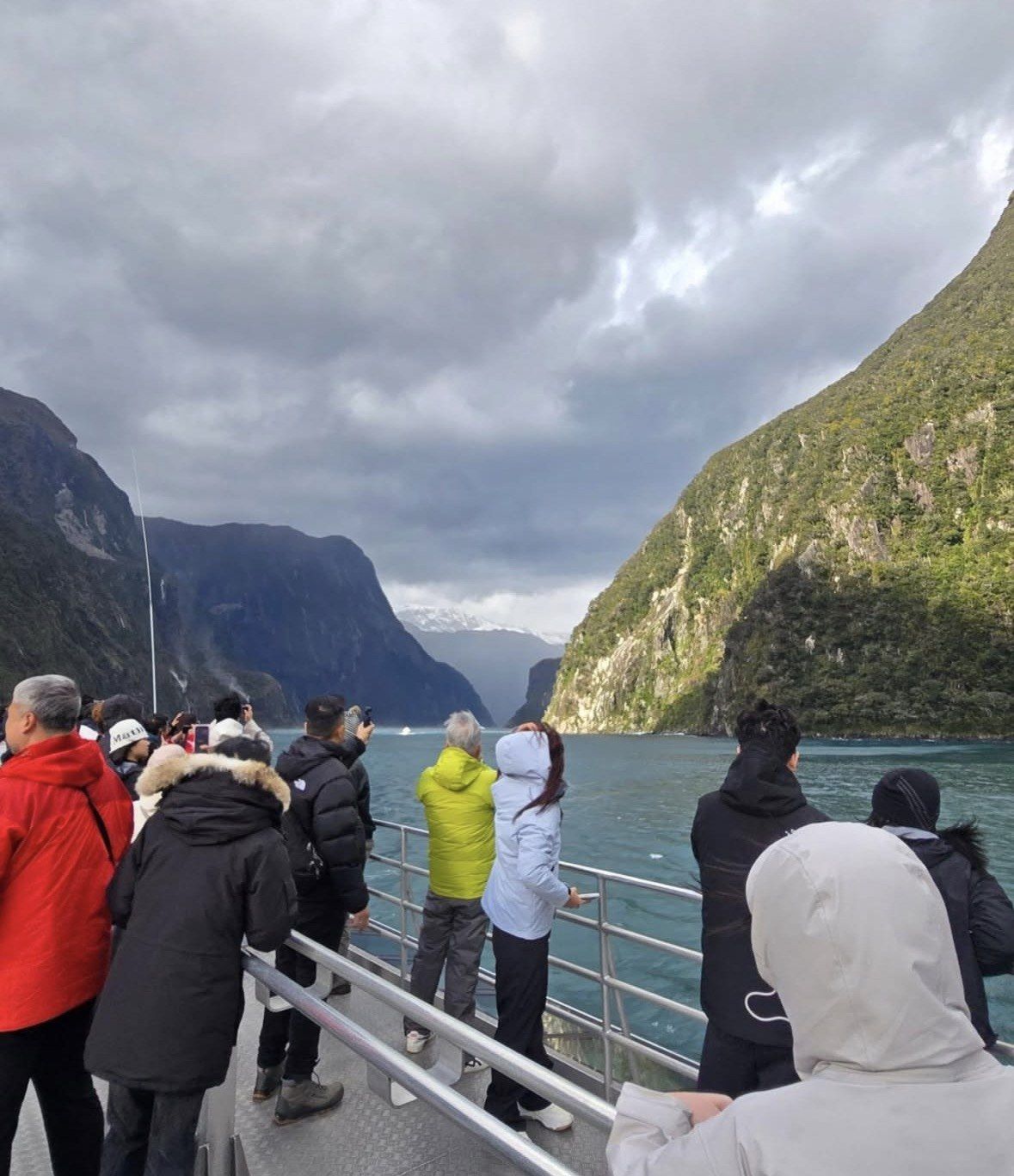
Time of day matters more than month. Milford Sound Tourism advises travelling the road before 8am or after 11am, or staying overnight nearby, to miss the coach peak, which is exactly why the Queenstown tours leave at 6:30am and 7:00am. Rain is no reason to move your booking: the fiord averages over 7 metres a year and the walls fill with temporary waterfalls when it pours. Scenic flights are a different matter, since the fiord's weather is notoriously localised.
October to April: summer season, busiest midday, tunnel signals and up to 20 minute delays
May to September: winter, possible snow, ice and chain requirements on the road
Travel the road before 8am or after 11am, or stay overnight nearby, to miss the coach peak
Rainfall averages over 7 metres a year, so pack rain gear in every season
Fur seals, bottlenose dolphins and kea are seen year-round; Seal Rock is the usual seal ledge
Fiordland crested penguins (tawaki) are seen and heard at landing beaches from July to December, with chicks fledging at about 75 days in late November or early December
Humpback whales are seen rarely, in October and November
What to pack for a day on the fiord
A hard shell rain jacket does more here than an umbrella, because the wind off the water will fold an umbrella within minutes and the rain arrives sideways. Add a warm mid-layer for the outside decks, which stay cold even in summer. Carry a debit or credit card: the car park machines take no cash, and the hourly charge applies to the boat-only tours. The premium small-group tour provides no water bottles, so bring a reusable one.
Footwear that copes with wet boardwalks is worth it if your tour includes the road walks at Mirror Lakes, Lake Gunn or The Chasm. Bring any medication you need with you, since there are no shops between Te Anau and the fiord. Leave the drone at home: drones are prohibited in Piopiotahi and throughout Fiordland National Park. If you are prone to seasickness, take something before boarding rather than after the swell near the fiord entrance finds you.
Waterproof hard shell jacket, and waterproof trousers in winter
Warm mid-layer for the open decks
Shoes that handle wet boardwalks and gravel car parks
Debit or credit card for the car park machines, which take no cash
Reusable water bottle, especially on the premium small-group tour
Any medication you need, as there are no shops along the road
Camera with a lens cloth, since spray and rain are constant; no drones, which are prohibited park-wide
Seasickness tablets taken before boarding if you are sensitive to swell
Local rules and tips people get wrong
Use the Māori name Piopiotahi and you will hear it back from drivers and skippers. Drones are prohibited in Piopiotahi and throughout Fiordland National Park, dogs are not allowed anywhere in the park including the Milford Road corridor, and camping in the Milford Sound car parks is prohibited. All waste must be carried out, and campervan dump stations exist only in Te Anau and Manapouri. Between the Hollyford Road junction and The Chasm you are in a no-stopping avalanche zone.
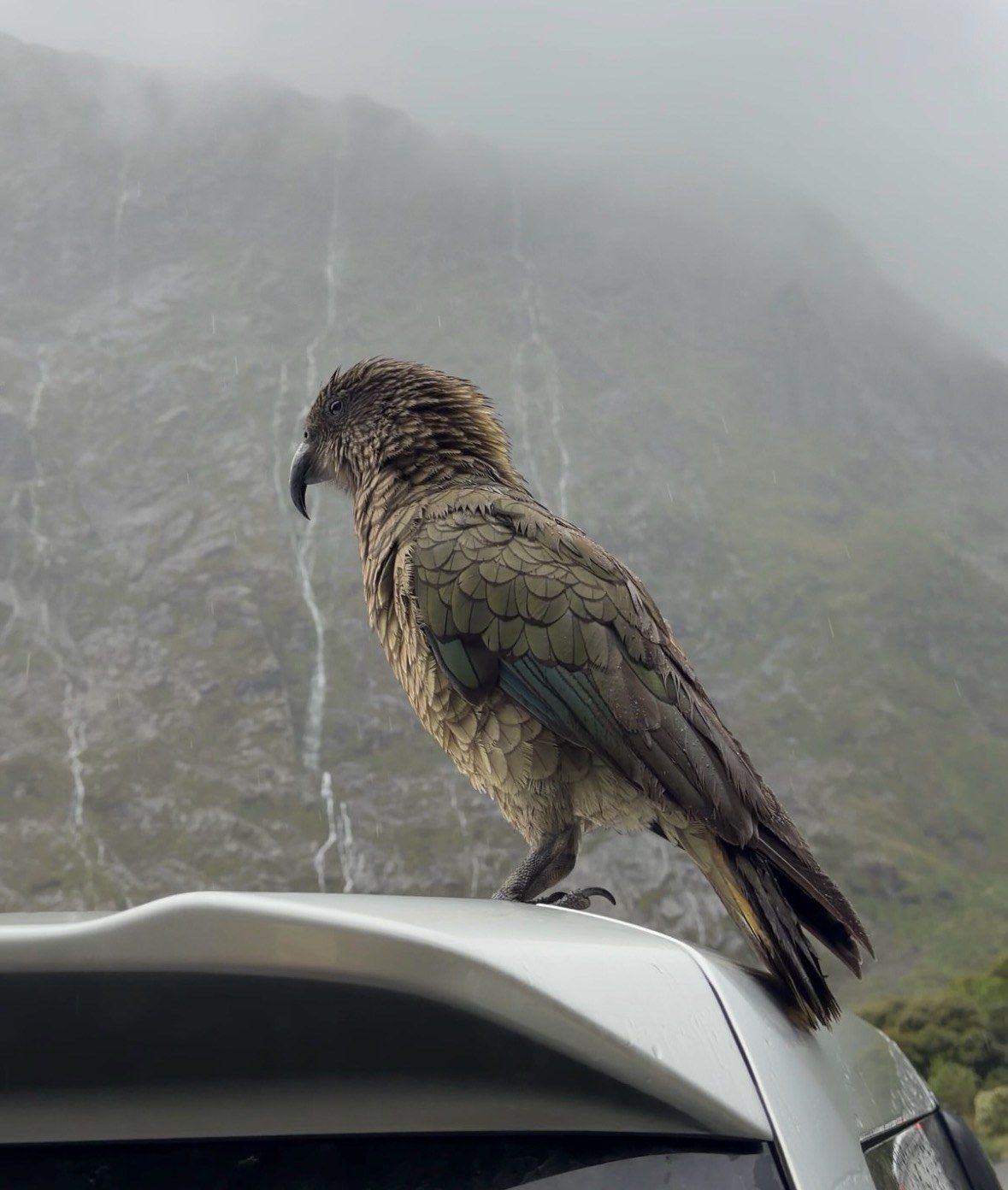
Wildlife rules are enforced for good reason. DOC asks visitors not to approach marine mammals or penguins and to let animals start any close contact. Feeding kea is prohibited and harmful: DOC recorded five kea killed by vehicles on the Milford Road between 3 April and 14 June 2024, three of them at Monkey Creek, and warns never to drive off while a kea is on your vehicle. Prices on this page are in New Zealand dollars and are all 'from' prices.
Drones are prohibited in Piopiotahi and across Fiordland National Park
Dogs are not allowed anywhere in the park, including the road corridor
Camping in the Milford Sound car parks is prohibited
Carry all waste out; dump stations are only in Te Anau and Manapouri
Do not feed kea, and never drive away with one on your vehicle
Keep your distance from seals, dolphins and penguins and let them approach
Mobile coverage along the road is very limited, so download anything you need in Te Anau
Health and safety on the road and the water
Cold and wet are the realistic health risks here rather than anything exotic. Conditions on the open decks are colder than the forecast suggests, and with over 7 metres of rain a year you should assume you will get wet at some point. There are no shops between Te Anau and the fiord, so carry prescriptions and anything for motion sickness with you. Te Rua-o-te-moko / Fiordland National Park Visitor Centre at 1 Lakefront Drive, Te Anau can advise before you set off, on +64 3 249 7924.
Mobile coverage along the Milford Road is very limited; DOC notes phones at Knobs Flat, the Homer Tunnel for emergency use and at Milford Sound. Safety guidance for the fiord is to drop, cover and hold in an earthquake and then move away from the water. Avalanches, rockfall and landslides affect the road itself, especially May to November, and it is monitored around the clock by the Milford Road Alliance, so check conditions on the day of travel.
Dress for cold and rain on the outside decks in every season
Carry prescriptions and seasickness remedies; no shops on the road
Mobile coverage is very limited; emergency phones at Knobs Flat, the Homer Tunnel and Milford Sound
In an earthquake, drop, cover and hold, then move away from the water
Do not stop between the Hollyford Road junction and The Chasm; it is an avalanche zone
Snow chains may be required May to September, when the road can be icy
Fiordland National Park Visitor Centre, 1 Lakefront Drive, Te Anau, +64 3 249 7924
Location
Find Milford Sound
Milford Sound Visitor Terminal, at the end of State Highway 94, Fiordland National Park, Southland, New Zealand.
Plan your visit
Practical information for Milford Sound
Getting there, cruise departure points, weather, wildlife and the stops along the Milford Road.
Straight answers on timings, prices, weather and what the tours on this site actually include, with every figure taken from the operator listings.
Time on the water is between 1 hour 40 minutes and 2 hours on every boat-only option listed here. The Small Boutique Cruise Experience runs 1 hour 45 minutes from NZ$189 and is rated 4.9 (3,254 reviews); the 2-Hour Milford Sound Scenic Cruise gives you the full 2 hours from NZ$179, rated 4.8 (1,646 reviews). Lowest cost is the Milford Sound Cruise, from NZ$143, a 1 hour 40 minute or 2 hour sailing rated 4.7 (567 reviews). All prices are in New Zealand dollars and are 'from' prices, so check availability for your date.
Sleep in Te Anau if your itinerary allows it. Te Anau to Milford Sound is 120 km, about two hours without stops, and DOC advises allowing around eight hours for the 240 km round trip with stops and a cruise. Queenstown to the fiord and back is 600 km and takes 12 to 14 hours, which is exactly why DOC suggests basing yourself in Te Anau; a coach from Queenstown runs about five hours each way. Departure times reflect that: the Award Winning Full Day Tour & Cruise from Te Anau is 9.5 hours from NZ$315, rated 5.0 (1,321 reviews), against 12 to 13 hours for the Queenstown coach and small-group days.
Early or late, and avoid the middle of the day. Milford Sound Tourism advises travelling the Milford Road before 8am or after 11am, or staying overnight nearby, to miss the midday coach peak, so the boats sailing between late morning and early afternoon are the ones absorbing that traffic. Queenstown small-group tours on this site pick up at 6:30am or 7:00am precisely to get ahead of it. If you are already at the fiord and booking a boat only, take the first sailing of the day.
Rain is normal here and it improves the fiord rather than spoiling it. Milford Sound is one of New Zealand's wettest places, with rainfall averaging over 7 metres a year, and heavy rain is when the waterfalls down those rock walls are at their biggest. Bring a proper waterproof jacket and layers in any season rather than an umbrella, since boats have open decks. Wildlife does not stop for weather either: fur seals, bottlenose dolphins and kea are seen year-round, with Seal Rock the landmark where seals most often bask.
Every day sailing covers the same 16 km fiord, so the real difference is how many people are around you. A boutique boat such as the one listed here, 1 hour 45 minutes from NZ$189, suits photography and quieter waterfall approaches; the 2-Hour Milford Sound Scenic Cruise, from NZ$179, uses smaller boats for closer views and is complimentary for children under 3. Larger day-cruise vessels give you more indoor space, which matters when the weather closes in, and the large-boat sailing from NZ$143 includes access to the operator's Milford Sound app. Compare the tours on duration and group size, because the price range is narrow.
Plan on arriving well before your sailing time. Check-in is 20 minutes before departure on the large-boat cruise and 30 minutes before on the 2-Hour Scenic Cruise, where boarding closes 5 minutes before the departure time; the Cruise Milford NZ counter is the second on the left inside the Milford Sound Visitor Terminal. In high summer the listing tells you to allow up to an hour for parking and the walk to the terminal, and parking is a 'not included' item on boat-only bookings at NZ$10 per hour in the main car park, card payment only at the machines. On a coach or small-group tour instead, the operator handles all of that and the only time that matters is your pickup.
DOC calls October to April the busy summer season on the Milford Road and May to September winter, when the road can be snow-covered and icy and snow chains may be required. Avalanches, rockfall and landslides affect the road, which is monitored around the clock by the Milford Road Alliance, so winter is the season when letting a coach or small-group operator do the driving makes most sense. The Homer Tunnel, 1.2 km long at 945 m above sea level, runs on traffic signals in the summer peak with delays of up to 20 minutes each way. For penguins, Fiordland crested penguins are seen and heard at landing beaches from July to December.
Flying is the option that buys back a day. The Milford Sound Flight and Cruise Tour from Queenstown takes 4.5 hours in total, from NZ$895, with return scenic flights, a guaranteed window seat and a 1 hour 45 minute sailing, rated 4.9 (2,241 reviews); the version including lunch and reserved cruise seating runs 5 hours from NZ$958. The Half-Day Milford Helicopter Flight and Cruise from Queenstown is 4 hours from NZ$1,735, with hotel pickup, landing and facility fees and headsets included. All flights are weather dependent and routes or landings can change at the pilot's discretion, since the fiord's weather is notoriously localised and can be closed in while the rest of the region is clear.
Choose it only if having the fiord to yourself after the day boats leave is the point of your trip. The Milford Sound Mariner Overnight Cruise is listed as 2 days from NZ$1,398, rated 4.7 (167 reviews), with private en suite cabins, dinner, breakfast and use of kayaks or tender boats; check in 30 minutes before, check-in closes 15 minutes before and gates close 5 minutes before departure, and these sailings are sold on final-sale terms. The Milford Sound Overnight Cruise on the Fiordland Jewel runs 17.5 hours from NZ$1,449, rated 4.8 (135 reviews), with a three-course dinner, kayaking, a tender-boat excursion and a top-deck hot tub after dinner, and takes just 20 passengers a night. Neither includes transport to the fiord, and overnight passengers park in the coach park at a flat NZ$30 from 2pm, with the hourly rate applying before that.
Drones are prohibited in Piopiotahi Milford Sound and throughout Fiordland National Park, which catches out a lot of photographers. Dogs are not allowed anywhere in the park, including the Milford Road corridor, camping in the Milford Sound car parks is prohibited, and all waste must be carried out, with campervan dump stations only in Te Anau and Manapouri. Mobile coverage along the road is very limited, with phones at Knobs Flat, the Homer Tunnel for emergencies and Milford Sound itself, and public toilets exist only at Te Anau, Knobs Flat and Milford Sound. On the water, DOC asks you not to approach seals, dolphins or penguins and to let the animals initiate any close contact.
The early sailings and the small-group vans fill first in summer.
Every passenger passes through a terminal that grew out of a 1991 Visitor Centre and a NZ$12m redevelopment opened on 24 April 1992, with the operating company taking the name Milford Sound Tourism Ltd in 2016. In January 2026 the Minister of Conservation confirmed a DOC concession letting it run the terminal and car parks until 2050.