In shortTake the first sailing of the morning or the last of the afternoon. Milford Sound Tourism, which runs the terminal, wharves and car parks, advises driving the Milford Road before 8am or after 11am. The boats leaving between late morning and early afternoon are the ones carrying the Queenstown coach day. Early means calm water and shaded walls. Mid-afternoon means fewer people and warmer light.
before 8am or after 11amadvised road windows
3:25pmlast large-vessel sailing
1 hour 45 minutesboutique sailing afloat
over 7 metresrainfall a year
The best time of day for a Milford Sound cruise, slot by slot
Two slots are worth planning around: the first sailings of the morning and the last of the afternoon. Milford Sound Tourism, the company that manages the Visitor Terminal, the wharves and the car parks, tells visitors to be on the Milford Road before 8am or after 11am, or to sleep somewhere close by. Turn that advice around and you have the shape of the crowd. The sailings that leave between late morning and early afternoon are the ones absorbing the passengers who left Queenstown at dawn, and those are the ones to leave alone.
Published timetables for a sample summer day show first sailings at 9:30am and 10:30am, a dense block between 11:15am and 1:30pm, and one late departure at 3:25pm on a large vessel. Winter schedules are thinner and operators move times, so confirm yours when you book.
Scale is what makes the midday block worth dodging. More than a million visitors a year reach the fiord, contributing about NZ$200 million to the regional economy, and nearly all of them come through one road and one terminal. The wharves are quietest at the front of the day, before the coach wave lands, and again in the last couple of hours, once the vehicles have started the long run back. Every price on this site is a from price, in New Zealand dollars.
| Departure slot | When to be on the road | What it feels like | Sailing to look at |
|---|
| First sailings, from around 9:30am | Before 8am | Calm water, quiet wharves, walls still in shade | Boutique 1 hour 45 minutes, from NZ$189: check its times |
|---|
| Mid-morning to early afternoon, roughly 11:15am to 1:30pm | The coach arrivals run from about 11am | Busiest wharves and car park of the day | Only if the rest of your itinerary leaves no choice |
|---|
| Late sailing, 3:25pm on a large vessel | After 11am | Terminal emptying, warmer light down the fiord | Boutique 1 hour 45 minutes, from NZ$189: check its times |
|---|
| Whichever slot the driver has booked | Te Anau hotel pickup, 9.5 hours door to door | Road stops and timing handled for you | Award Winning Te Anau full day, from NZ$315 |
|---|
The boutique sailing for an early or late slot
If you are driving to the Visitor Terminal and want the quiet end of the day, check the times on this 1 hour 45 minute boutique cruise: from NZ$189, rated 4.9 (3,254 reviews), with complimentary coffee, tea and biscuits on board and no food sold during the sailing.
★ 4.9/5 · 3,254 reviews
Morning or afternoon Milford Sound cruise
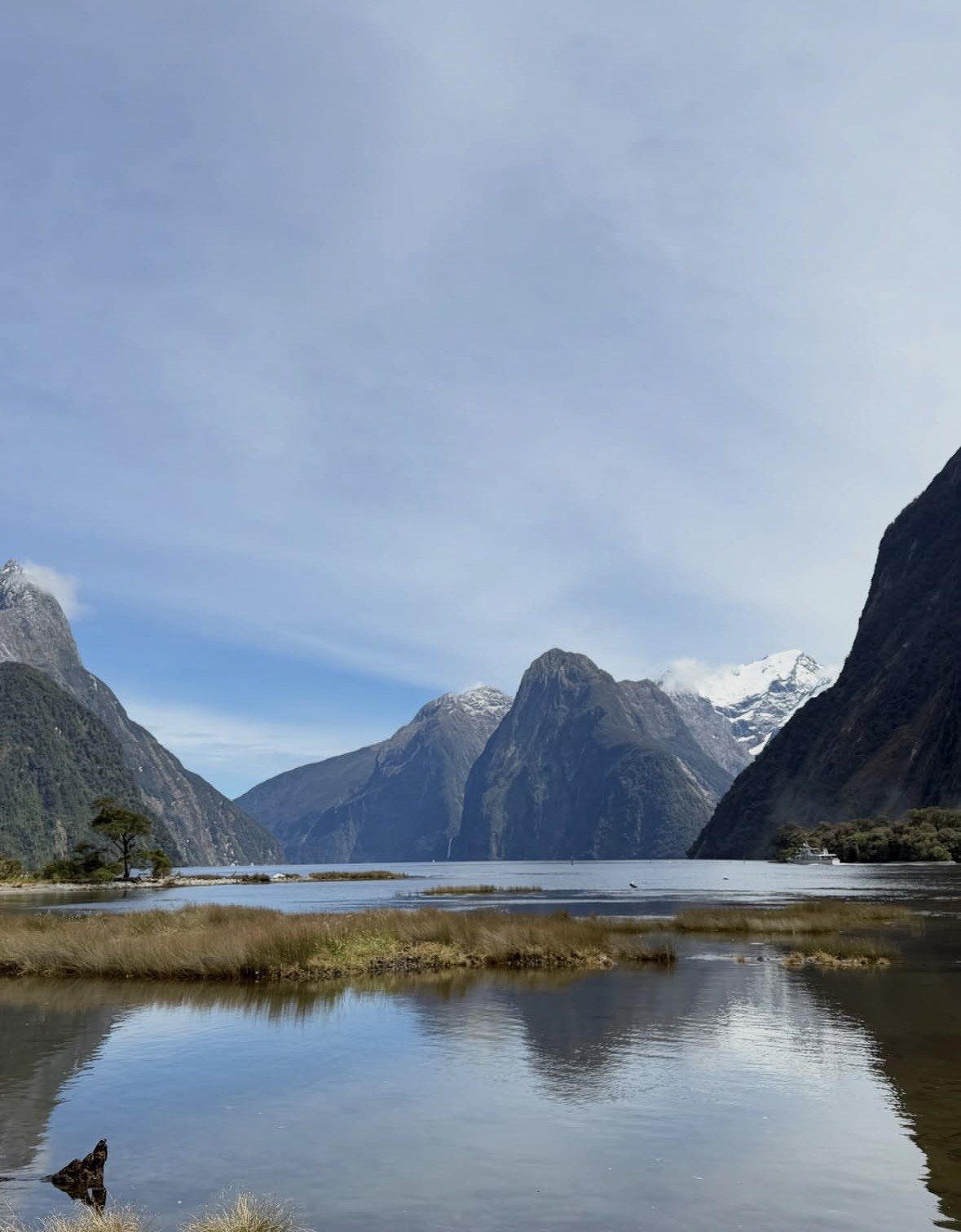
Morning gives you the better odds of flat water. Along the Milford Road, the reflections at Mirror Lakes come out best on calm mornings before any wind touches the surface, and that stillness usually carries through to the first boats on the fiord. Fewer people are on deck at that hour, which matters on a narrow bow where everyone wants the same stretch of rail and the same view down the water.
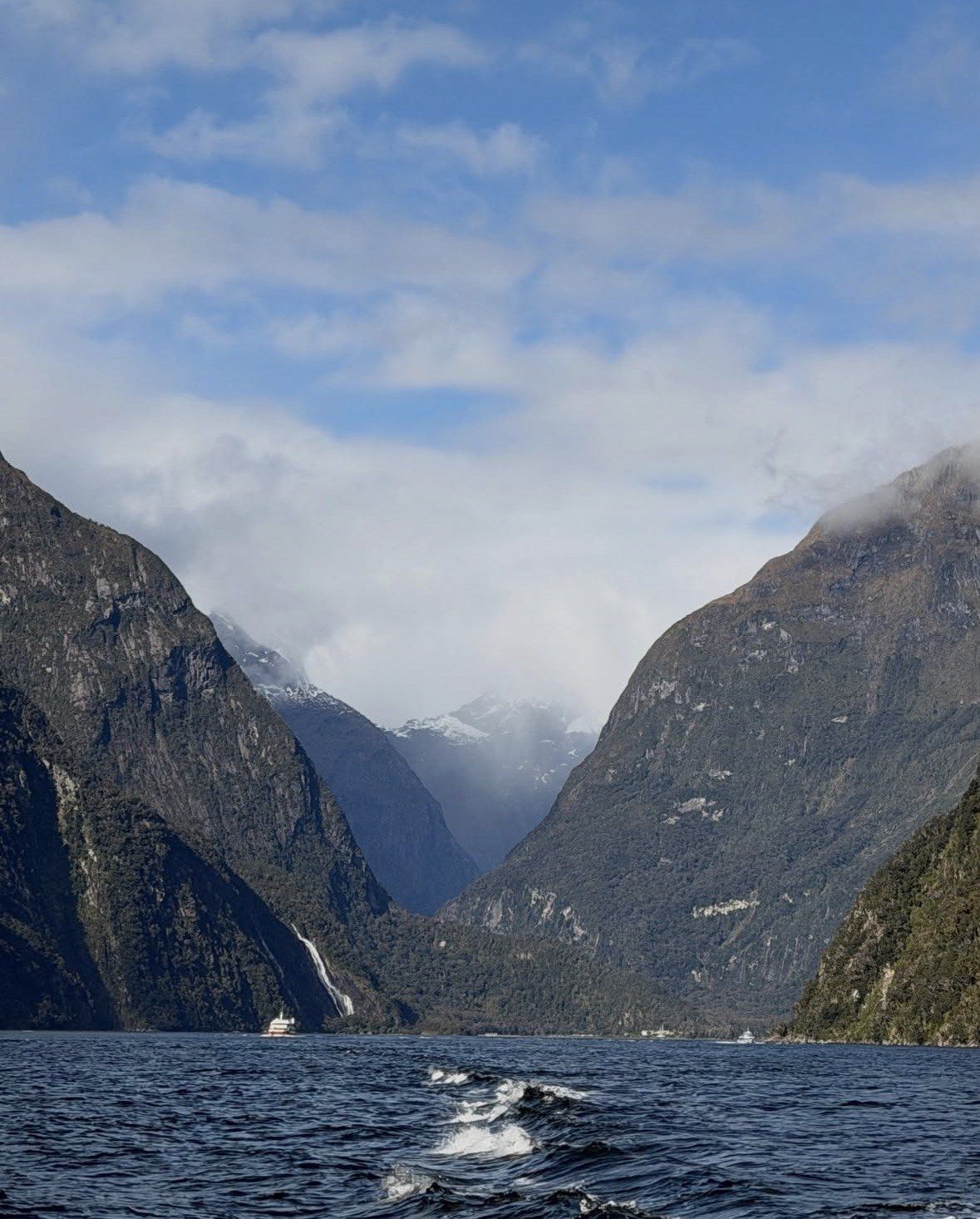
Afternoon trades calm for space. By mid-afternoon the car park is releasing vehicles rather than filling, the counters in the terminal have cleared, and the light down the fiord is lower and warmer. The 3:25pm large-vessel departure is the purest version of that: the coaches have left, and so has most of the queueing.
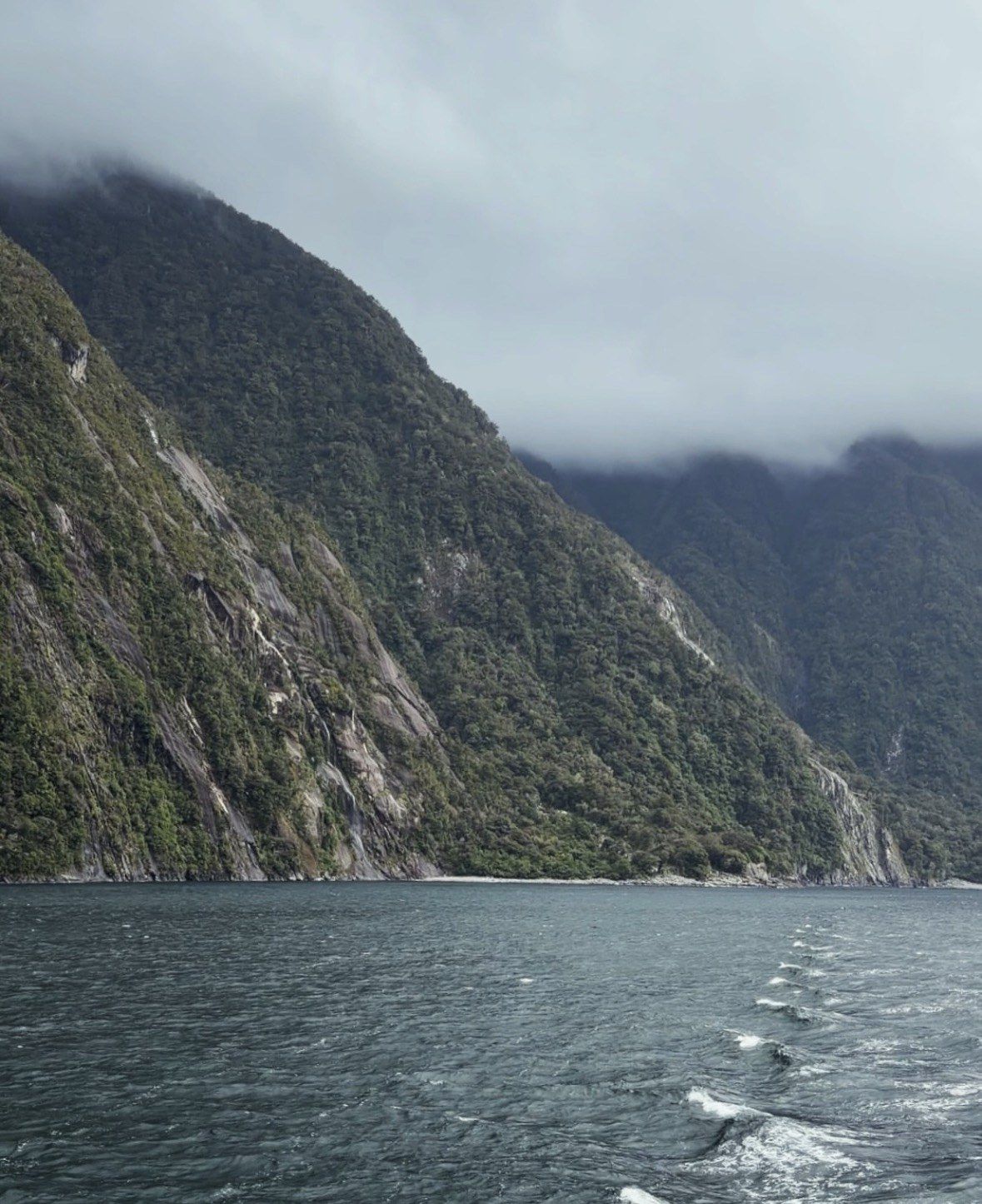
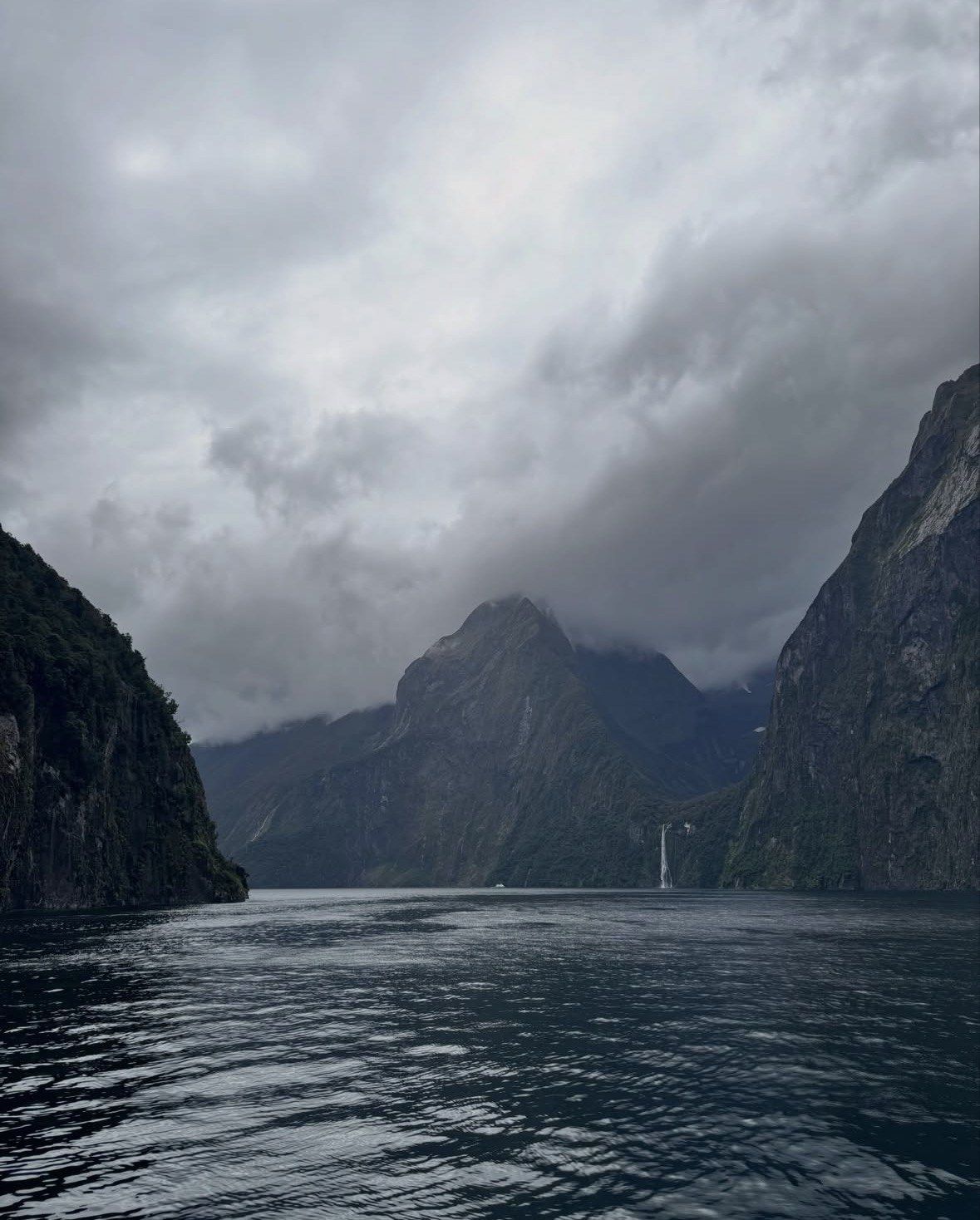
Light here is complicated by the walls themselves. Mitre Peak stands 1,692 m straight out of the water in sheer rock, and the glacier-carved sides carry on to depths of up to about 265 m, so the fiord works like a corridor with very high sides. Early and late you shoot into shade for long stretches. At midday more sun reaches the rock, which is the one real argument for the busiest block of the day.
Timing the drive to the slot you want
From Te Anau it is 120 km on State Highway 94, about two hours without stops, and DOC puts the 240 km round trip at around eight hours once you add scenic stops, a short walk and a cruise. A 9:30am or 10:30am sailing therefore means leaving town well before 8am, which is the window Milford Sound Tourism recommends anyway.
Build the slack at the front of the drive. Traffic signals take over the single-lane Homer Tunnel through the summer peak, and a red light there can hold you up for 20 minutes in either direction, which on its own can cost you an early check-in. Milford Sound Tourism asks drivers to allow up to 45 minutes for parking and roughly a 15-minute walk to the Visitor Terminal, and terminal check-in closes 20 to 30 minutes ahead depending on the sailing. Where you have booked the boat alone, parking sits outside that ticket: the main car park charges NZ$10 per hour at machines that take cards and no cash, so carry one rather than losing minutes off your slot sorting payment out.
Two practical details decide how late you can leave. Fuel in Te Anau for the whole 240 km, because nothing between there and the fiord sells petrol or anything else, and doubling back for a station will take your morning sailing with it. Signal is very limited along the road as well, with phones at Knobs Flat, at the Homer Tunnel for emergencies and at Milford Sound, so from most of the valley there is no way to tell anyone you are ten minutes behind your departure.
Where you sleep decides which slot you can book
A night in Te Anau is what makes the early slot realistic. Two hours of driving from a Te Anau bed puts you in the car park before the 11am wave, with the whole afternoon left for the road stops on the way back. DOC recommends basing yourself in Te Anau instead of taking on the Queenstown round trip of 600 km and 12 to 14 hours.
A Queenstown coach day takes the choice out of your hands. The coach runs about five hours each way, so departures are early: pickups are listed at 6.45am, 6.55am and 7.35am around town, and the vehicle reaches the fiord inside the busiest part of the day. That suits you if you have one spare day and want someone else at the wheel. Do not expect a quiet wharf out of it.
Staying at the fiord itself is the other way to reach the first sailing. Milford Sound Lodge has riverside and mountain-view chalets, chalet suites and 20 powered campervan sites for self-contained vehicles, plus a 24-hour guest kitchen and lounge. Sites are typically fully booked from October to April, a two-night minimum applies in that peak, and tents are not accepted. Parking up overnight to be first on the water is not an alternative, since camping in the Milford Sound car parks is not permitted.
Without a car, the slot arrives with the tour. The Award Winning Milford Sound Full Day Tour & Cruise runs 9.5 hours out of Te Anau, from NZ$315 and rated 5.0 (1,321 reviews), covering a local driver-guide, national park fees, morning tea with home baking, and scenic stops with optional walks; you are collected from your Te Anau hotel or meet the vehicle at 60 Town Centre. The driver sets the departure slot and the road timing.
Weather matters more than the hour
Rainfall here averages over 7 metres a year, so waiting for a clear slot usually means not sailing at all. Wet days are when hundreds of temporary falls run down the rock, and a hard shell will do more for your day than a different departure time. The weather is also notoriously localised: the fiord can be closed in while Te Anau and Queenstown sit under blue sky, and the reverse happens just as often.
The season sets the real limits. On DOC's calendar the busy summer covers October to April, with May to September counted as winter, months when the road can be snow-covered and icy and snow chains may be required, so an early departure needs the road checked before you commit to it. The Milford Road is prone to avalanches, rockfall and landslides, particularly from May to November, and the Milford Road Alliance monitors it around the clock. Check the road status on the morning you travel, and keep in mind that the stretch between the Hollyford Road junction and The Chasm is a no-stopping avalanche zone.
Pick your slot first, then open the sailing that runs in it: the 1 hour 45 minute boutique cruise if you are driving yourself to the terminal, or the Te Anau full day if you would rather hand over the driving and the timing.
- Go early for calm water and the quietest wharves, with the walls still in shade.
- Go late for an emptying terminal and warmer light, with 3:25pm the last large-vessel departure.
- Treat 11:15am to 1:30pm as the slot to avoid unless your itinerary forces it.
- Pack rain gear in any season, and check the road before you leave town from May to November.
Questions people ask
Do Milford Sound cruise departure times change in winter?
Timetables published by operators are sample-day schedules, and they thin out in the colder months. DOC treats October to April as the busy summer season and May to September as winter, when the road can be snow-covered and icy and snow chains may be required. Confirm the exact departure time at the point of booking rather than assuming a summer board still applies.
Is the morning better for wildlife on the fiord?
Season matters more than the hour. Fur seals, bottlenose dolphins and kea are reported in and around Milford Sound year-round, with Seal Rock the ledge where fur seals most often bask. The window for Fiordland crested penguins at their landing beaches runs July to December, when they can be heard as much as seen, while humpback whales show up only rarely and then in October and November. Whatever the hour, the DOC rule on board is to keep away from marine mammals and penguins and to let any close encounter be the animal's decision.
Can I change my booking if I pick the wrong slot?
Both tours listed on this site offer free cancellation up to 24 hours before the scheduled departure, so moving to an earlier or later sailing is straightforward if you decide a day ahead. Leave it later and you are relying on the clock at the terminal, where check-in closes 20 to 30 minutes before departure depending on the sailing. Rebook rather than hoping to make up time on the road.
Is the first sailing of the day best for photographs?
It gives you the calmest water and the least crowded deck, which is usually worth more than sun. The trade-off is shade. Mitre Peak rises 1,692 m straight out of the water in sheer rock walls that continue to about 265 m below the surface, so the fiord stays dark at the edges early and late. Bring a longer lens, because a wide frame flattens the scale.
Should I switch to an afternoon sailing if rain is forecast for the morning?
There is little point. Rainfall averages over 7 metres a year, so rain is the normal condition, and it is what switches on the temporary waterfalls down the walls. The fiord's weather is localised enough that a forecast made elsewhere often misses. Move your booking only if the road itself is affected, since the Milford Road is prone to avalanches, rockfall and landslides, particularly from May to November.
Read also