In shortMilford Sound in the rain runs at full volume. More than 7 metres falls in an average year, and a downpour switches on hundreds of temporary waterfalls on walls that reach 1,692 m at Mitre Peak. Keep the cruise you booked, pick a boat with indoor seating, pack a hooded hard shell instead of an umbrella, and check the live road status before you set off.
7 m+rain in an average year
1,692 mMitre Peak above the water
1 hour 45 minutestime afloat, boutique cruise
24 hoursfree cancellation window
Why Milford Sound is good in the rain
Rain is the standard condition here. More than 7 metres falls in an average year, which puts Milford Sound (Piopiotahi) among the wettest places in New Zealand. Wait for a blue-sky slot and you will run out of days before the fiord gives you one.
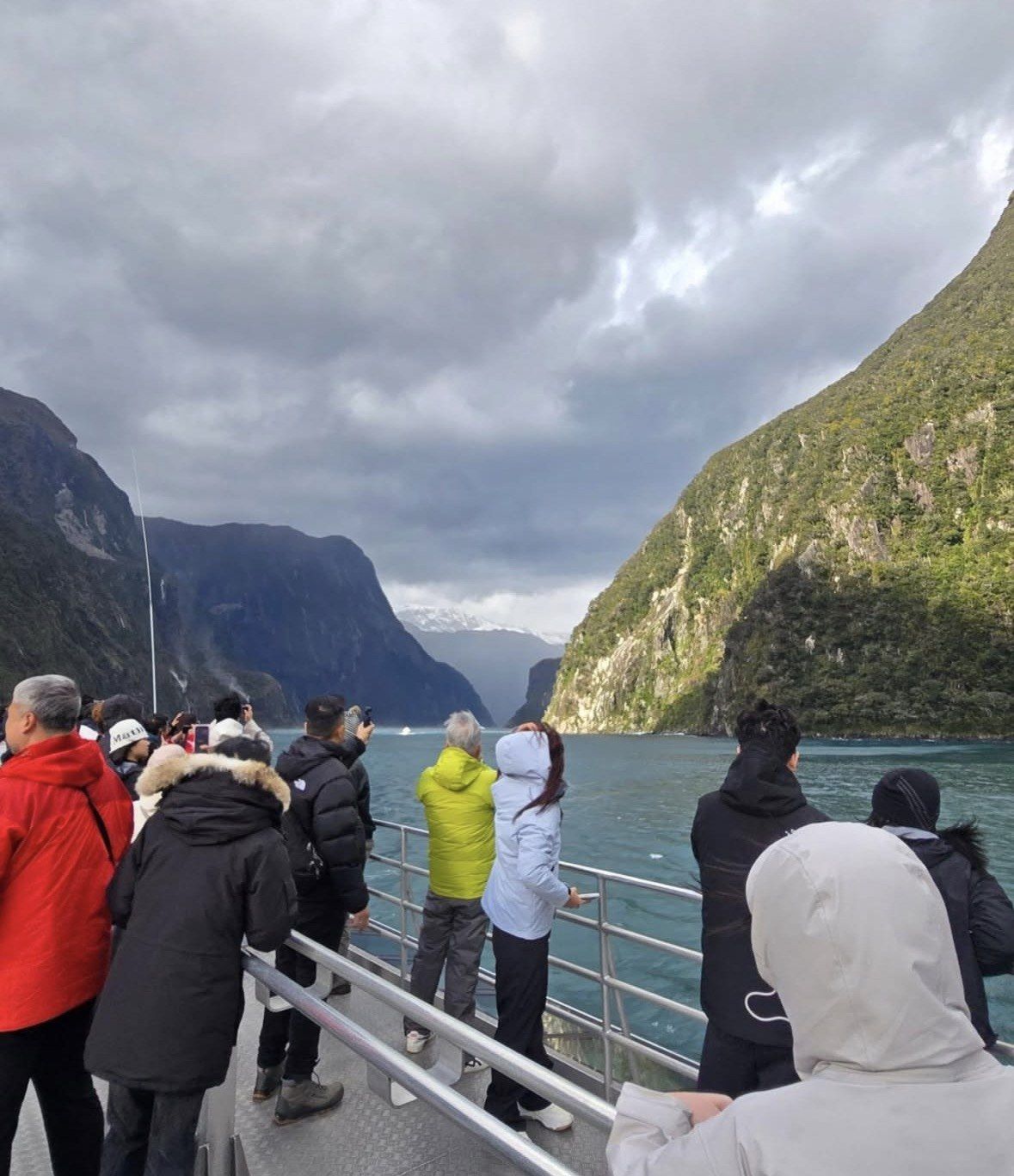
The fiord changes in one specific way when it rains hard. The rock walls run with water within minutes, and cloud sits low enough to cut the tops off the peaks, then lifts, then closes again while you are still in the same bay. The 1,692 m bulk of Mitre Peak vanishes and comes back. Below the hull, the same glacier-carved rock keeps going down to depths of up to about 265 m. Rain is also when the waterfalls are at their biggest.
Grey light suits the walls. You lose the postcard version with the summit showing, and you gain water on every surface and a view that shifts from one minute to the next while the boat moves.
Milford Sound waterfalls after rain
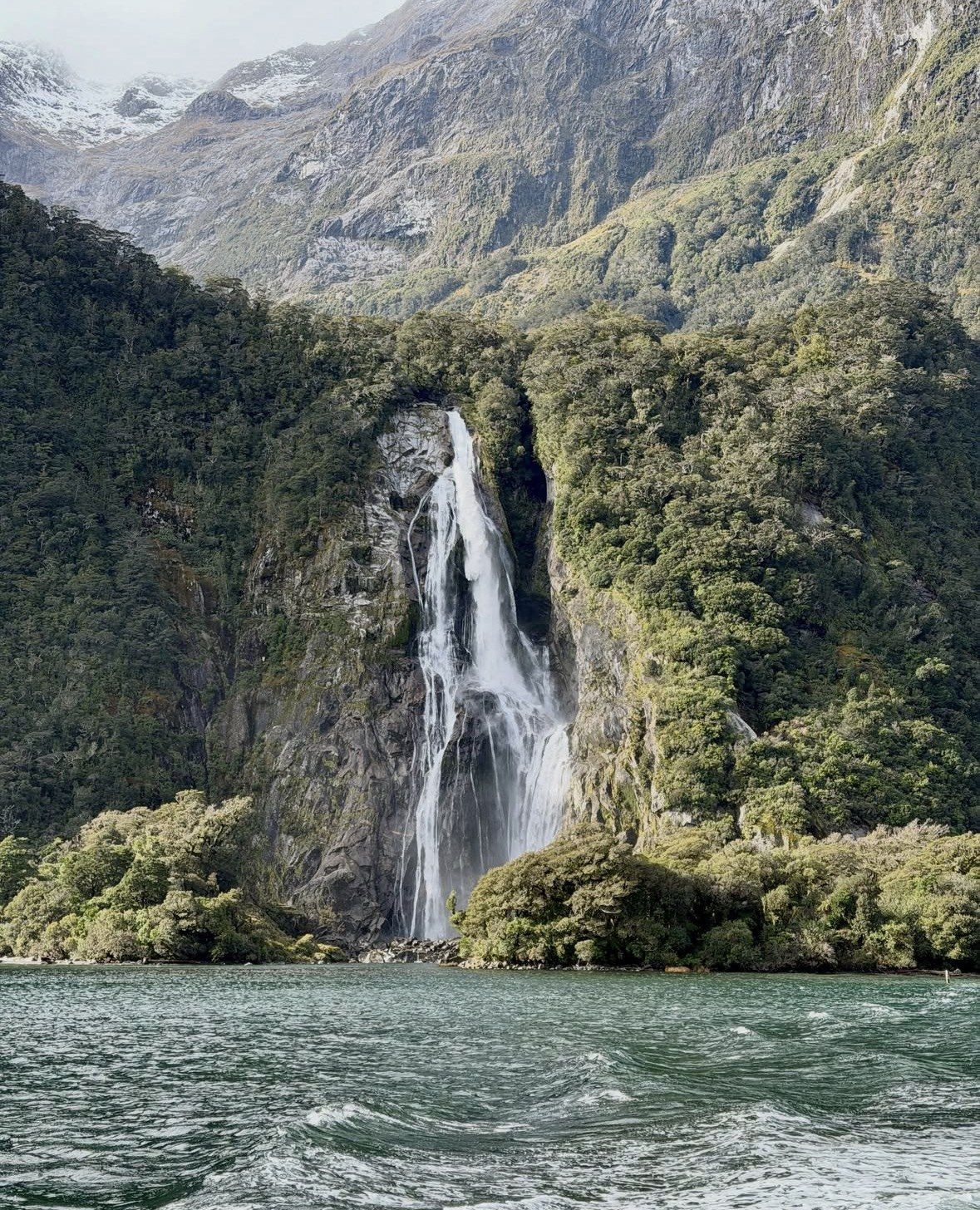
Hundreds of temporary falls appear on the rock within minutes of heavy rain, and they are what people remember. The permanent falls run hard at the same time, loud enough to hear from the deck before the spray clears enough to see them.
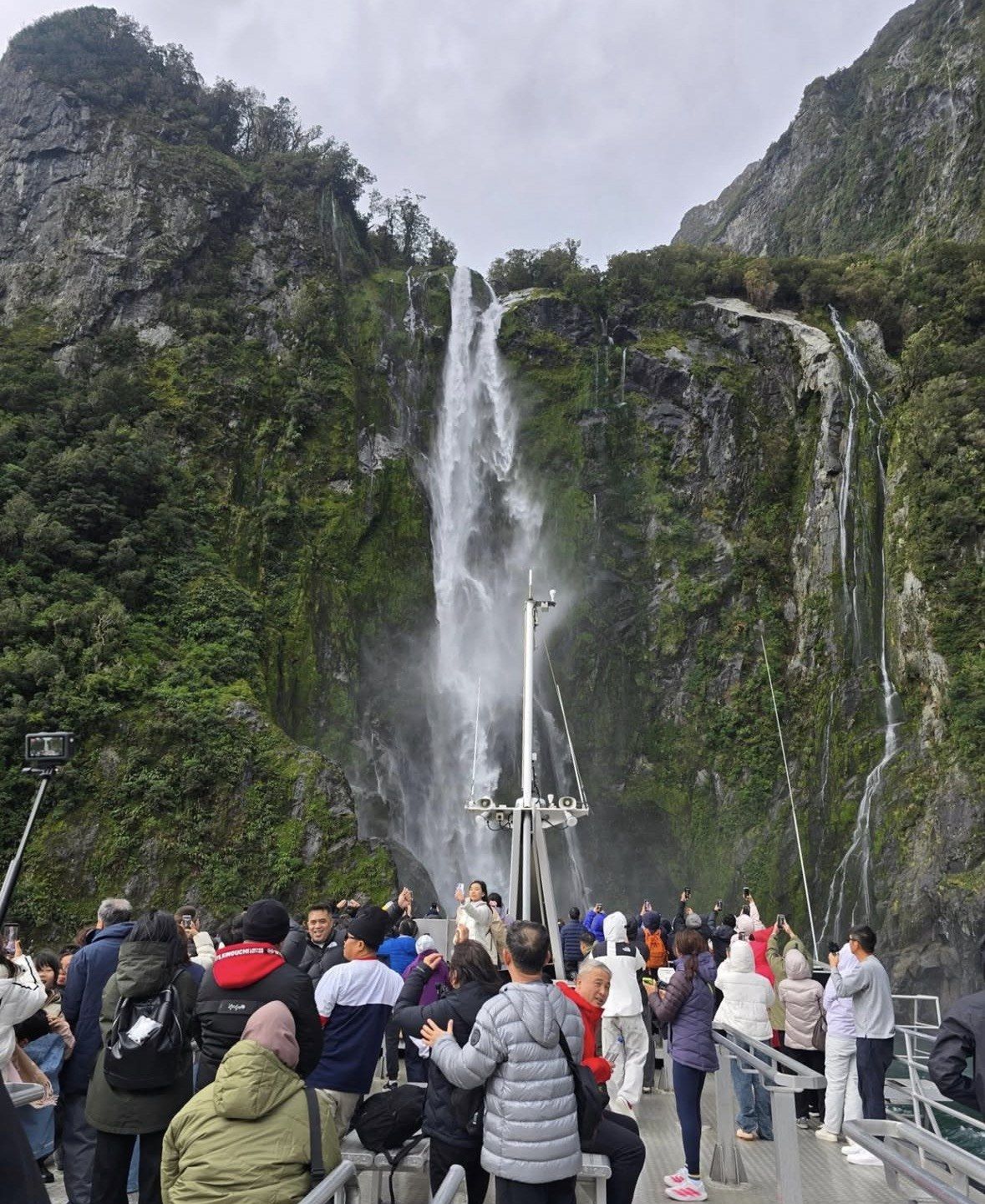
Boats nose in close to the falls, and that approach is the moment to be outside. Take the rail at the bow for the run in, then step back under cover once you are in the spray. Every day boat covers the same protected water: the Piopiotahi (Milford Sound) Marine Reserve, established in 1993, runs 16 km along the fiord and covers 690 hectares. Rain changes the volume of water coming off the walls. The route stays the same.
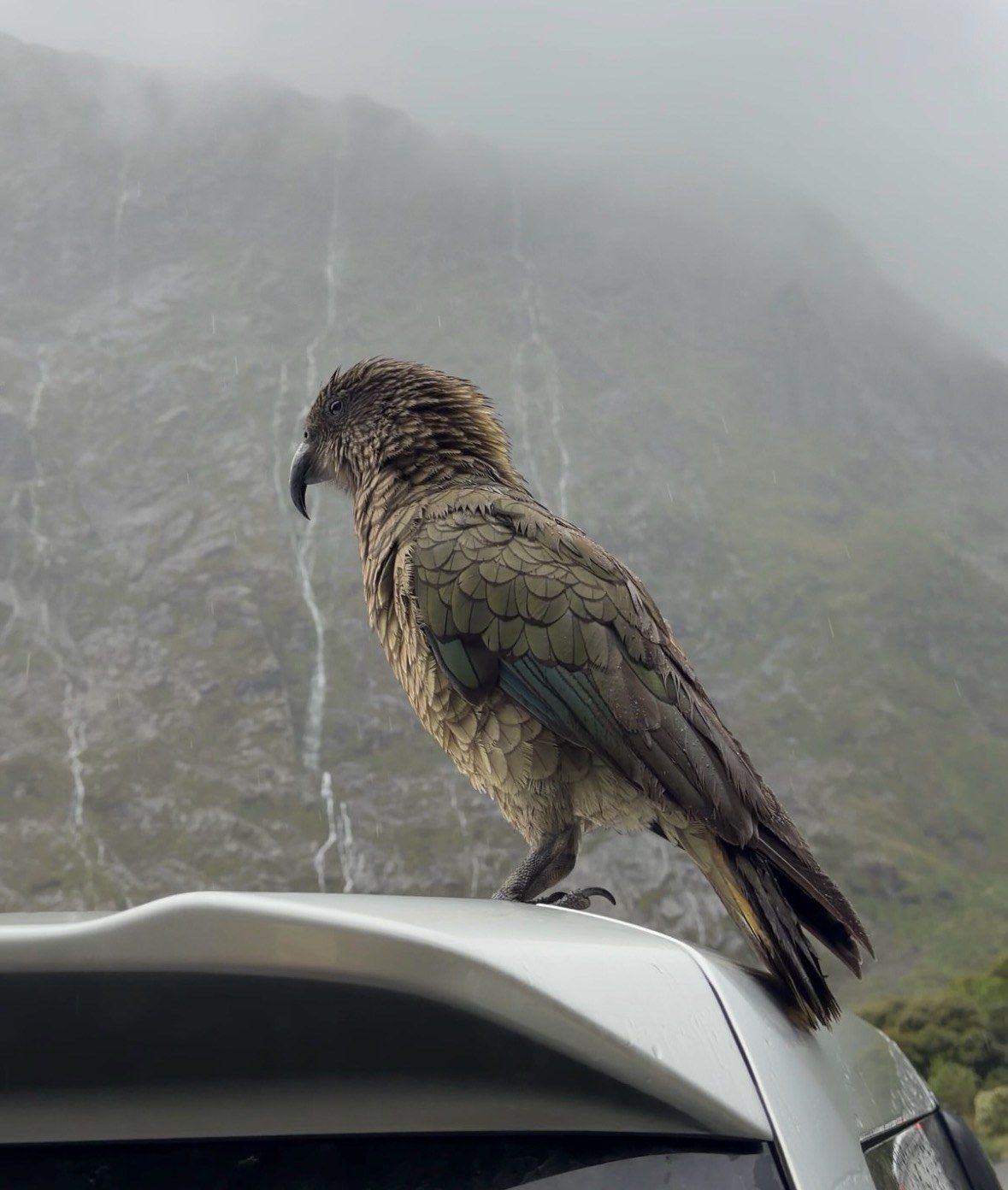
Wildlife carries on regardless. Fur seals still haul out at Seal Rock, and kea turn up along the road rather than on the water. Keep your distance and let the animals initiate any close contact, as DOC asks.
- Hundreds of temporary falls appear within minutes of heavy rain
- The permanent falls run at full volume, and the spray reaches well across the open deck
- Cloud shifts between the peaks and changes the scene bay by bay
- Waterfall approaches are short, so be outside and at the rail before the boat turns in
The wet-weather sailing to keep
If you are driving to the terminal yourself, this 1 hour 45 minute boutique cruise from NZ$189, rated 4.9 (3,254 reviews), puts you on the water among the temporary falls, with hot drinks on board and free cancellation up to 24 hours before departure.
★ 4.9/5 · 3,254 reviews
What to wear, and how to keep a camera working
A hooded hard shell beats an umbrella on an open deck, because the wind under those walls will fold an umbrella the first time the boat turns. Rain gear is needed here in any season, winter or midsummer. Waterproof trousers matter more than most people expect if you intend to stand out through the spray zones, and a dry top left in the car for the drive home is worth the space it takes up.
Layer for altitude as well as water. The Homer Tunnel sits at 945 m above sea level, so the temperature at the road stops is nothing like the temperature at the wharf.
Camera care on a wet sailing comes down to discipline: a microfibre cloth in a pocket, the body in a dry bag between approaches, and wiping the front element after each pass under the falls instead of at the end. Phones belong in the dry bag too. Shoot from under the deck overhang when the rain is horizontal and step out for the approaches. Drones are prohibited in Piopiotahi Milford Sound and across Fiordland National Park, so plan your shots from the deck and the road stops.
- Hooded waterproof jacket and overtrousers
- Shoes that cope with a wet deck and a wet car park
- Microfibre cloth and a dry bag for camera and phone
- Dry change of clothes left in the vehicle
- Card for the parking machines at the main car park, which take nothing else
What heavy rain does to the Milford Road drive
Wet weather hits the drive harder than the sailing. State Highway 94 is prone to avalanches, rockfall and landslides, it can close or require snow chains from May to November, and the Milford Road Alliance monitors it around the clock. Check the road conditions page on this site, then the live status on the day.
Prolonged rain slows everything down. The Homer Tunnel runs on traffic signals in the summer peak, with waits of up to 20 minutes each way, and a coach queue in poor visibility moves no faster. Fill up in Te Anau for the full 240 km return; nothing between there and the fiord sells fuel. Mobile coverage is very limited, with phones at Knobs Flat, at the Homer Tunnel for emergencies and at Milford Sound, and toilets only at Te Anau, Knobs Flat and Milford Sound. The stretch between the Hollyford Road junction and The Chasm is a no-stopping avalanche zone, so take your photographs before you reach it.
Check the road before you touch the booking. Both tours listed on this site allow free cancellation up to 24 hours before the scheduled departure, so look at the status the afternoon before and decide then. Heavy rain on its own is a poor reason to cancel.
Choosing a cruise in bad weather, and where to shelter
Indoor viewing is what to check when the forecast is bad. You want somewhere dry to sit between waterfall approaches, windows you can see out of, a hot drink on board, and enough room that the whole passenger list is not crowded into one doorway. Smaller boats leave you more rail to yourself on the approaches; larger vessels give you more sheltered floor space when it is really coming down.
Shelter at the fiord itself is limited, which is why the boat is the main rainy day plan here. The Milford Sound Visitor Terminal is where every cruise checks in and where you wait out a squall before boarding. The boutique sailing below serves coffee, tea and biscuits, and sells no food during the sailing, so eat before check-in. Third-party listings still advertise the underwater observatory at Harrison Cove, while the operator's own cruise page no longer mentions it; do not pay a premium for a product sold on the strength of it until you have confirmed it is running.
Timing still matters in the wet. Take the first sailing of the day or the last one, and skip the late-morning to early-afternoon block: the advice for the Milford Road is to travel before 8am or after 11am. Prices below are in New Zealand dollars.
| Tour | Starts from | Duration | From | Rating | On a wet day |
|---|
| Small Boutique Cruise Experience | Milford Sound Visitor Terminal | 1 hour 45 minutes | NZ$189 | ★ 4.9 (3,254 reviews) | Complimentary coffee, tea and biscuits; no food sold on board; parking charged separately at NZ$10 per hour, card only |
|---|
| Award Winning Milford Sound Full Day Tour & Cruise from Te Anau | Te Anau | 9.5 hours | NZ$315 | ★ 5.0 (1,321 reviews) | A local driver-guide handles the wet road; national park fees, morning tea with home baking, scenic stops and optional walks; drinks not included |
|---|
Questions people ask
Do cruises still sail when it rains heavily?
Rain alone does not stop a sailing, and the boutique cruise listed here departs every day of the year apart from Christmas Day. The road is what stops trips: State Highway 94 can close or require chains, particularly from May to November. Check live road status the evening before and again in the morning.
Is an umbrella enough on the deck?
No. A hooded waterproof jacket and overtrousers work far better, because wind funnelling between walls that top out at 1,692 m makes an umbrella useless and awkward in a crowded doorway. Rain gear is needed at Milford in every season.
Would a scenic flight be a better way to see the fiord in bad weather?
Flights are the option most likely to be affected. Scenic flights are weather dependent, and routes or landings can change at the pilot's discretion. The weather here is notoriously localised, so the fiord can be closed in while Queenstown looks clear. On a wet forecast a boat is the more reliable plan.
What time of day is best on a rainy day?
Take the first sailing or the last one and avoid the late-morning to early-afternoon block, when coach arrivals concentrate at the wharves. Travel the Milford Road before 8am or after 11am. In rain, an emptier boat also means more sheltered seating and more room at the rail for the waterfall approaches.
Can I see the walls at all when cloud is low?
Usually yes, in pieces. Cloud tends to sit partway up the rock and lift and close repeatedly, so the summits come and go while the lower walls, the falls and the water stay clearly visible. Mitre Peak rises 1,692 m straight out of the water, so on a low-cloud day its top is often hidden while its base is clear. The fiord is a narrow corridor with very high sides, and that lower band is what you see most of in poor weather.
Read also