In shortThree layers cover a Milford Sound cruise: a waterproof jacket with a hood, something warm in wool or fleece underneath, and closed shoes with grip for wet decks. With an annual average above 7 metres of rain, that waterproof layer stays in the bag in January as surely as in July. Add a hat and gloves from May to September. Sunglasses and sunscreen earn their space on bright days.
over 7 metresaverage rain per year
May to SeptemberDOC's winter months
1 hour 45 minutestime on the water
from NZ$189boutique cruise, prices in New Zealand dollars
What to wear on a Milford Sound cruise
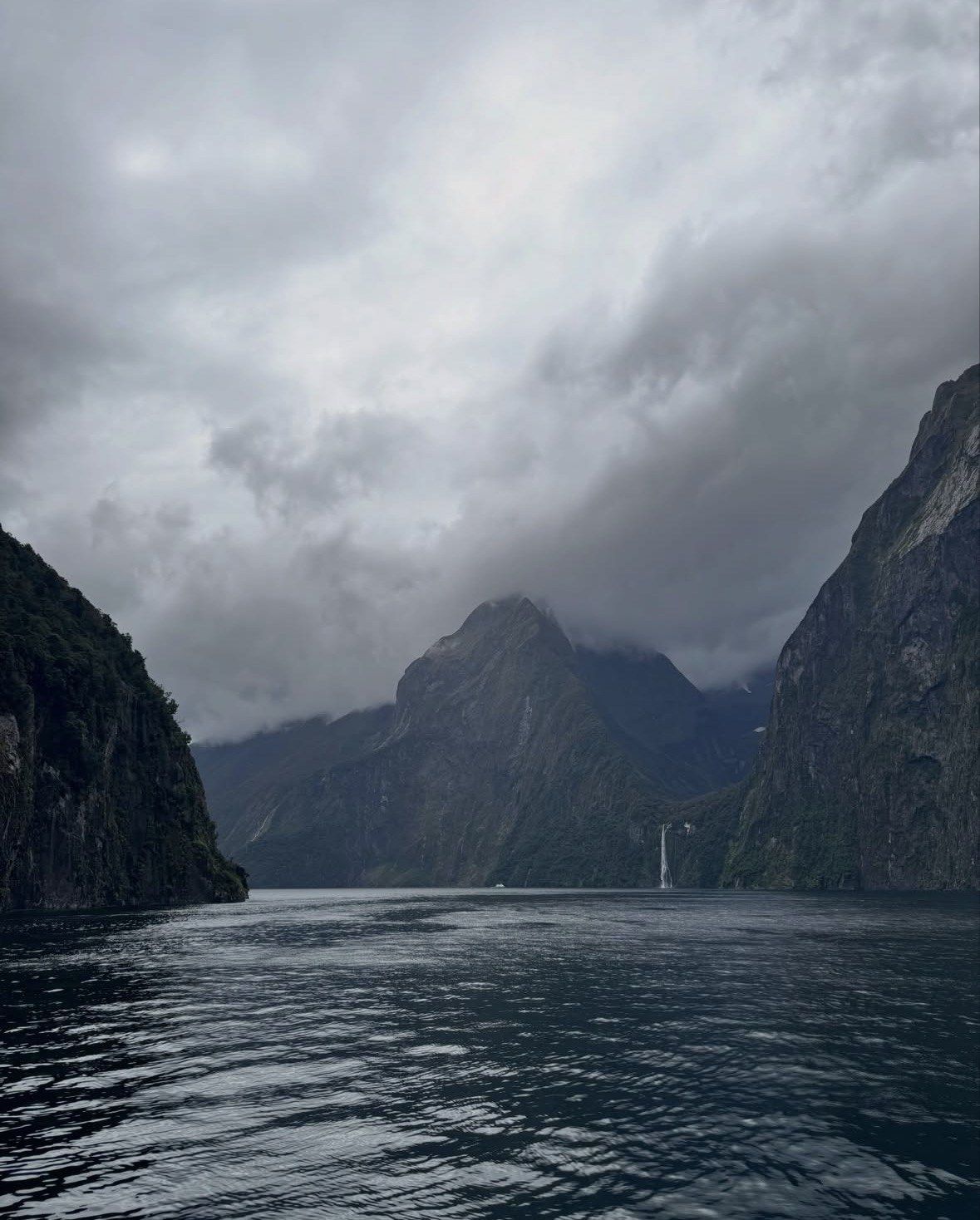
Work from the outside in. A waterproof jacket with a hood that pulls tight is the one item that decides whether you spend the sailing on deck or behind glass, and rainfall here averages over 7 metres a year, among the highest in New Zealand. Waterproof overtrousers matter more than most people expect. Spray comes off the bow and off the falls, and wet jeans stay wet for the two hours back to Te Anau.
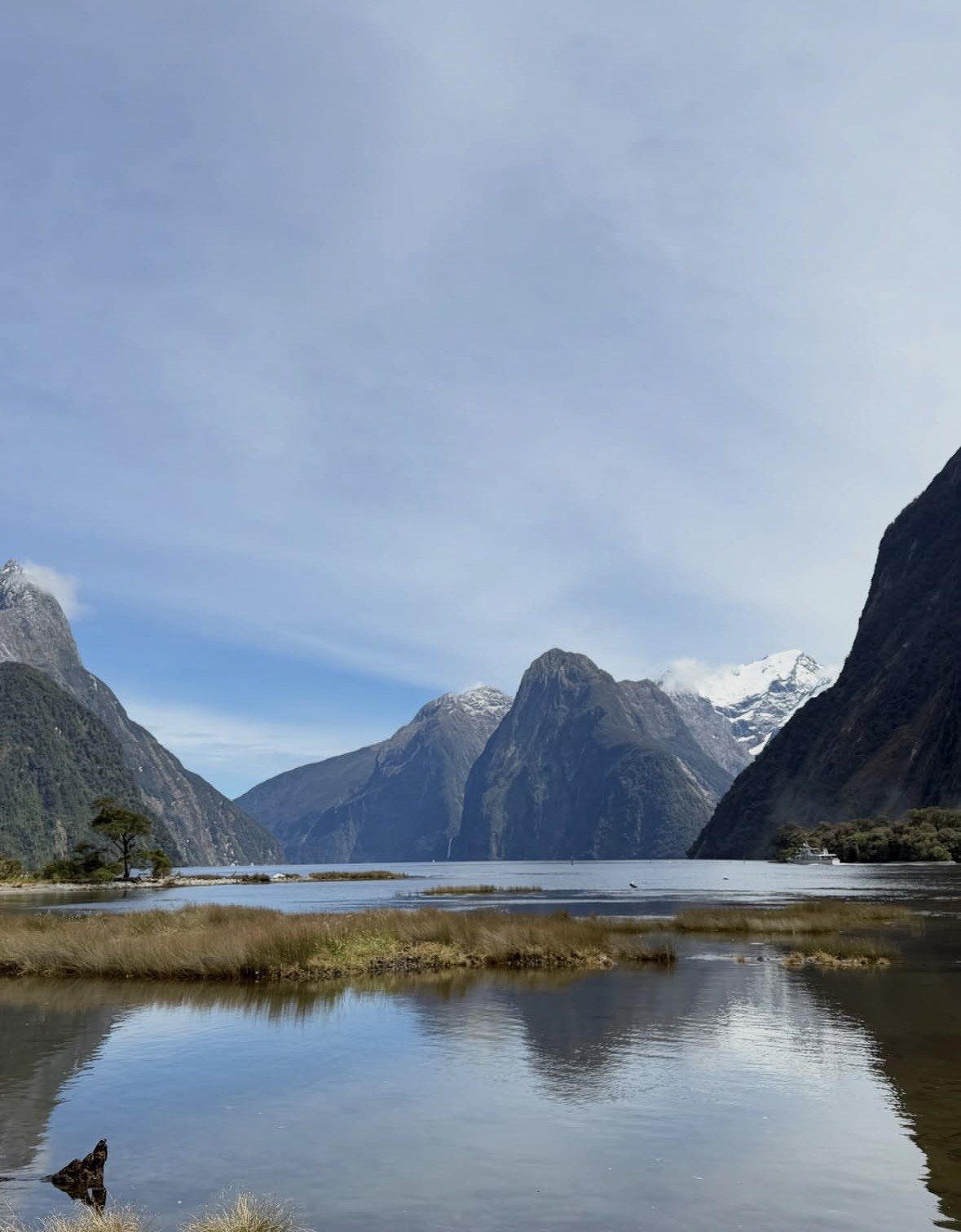
One warm mid layer of wool or fleece is usually enough under the shell. Mitre Peak rises 1,692 m straight out of the water and the walls funnel wind along the fiord, so the deck runs colder than the car park did. If you are stopping along the Milford Road on the way through, the Homer Tunnel sits 945 m above sea level and the air at the roadside stops has nothing in common with the air at the wharf. That is the argument for a packable extra layer.
Footwear is the detail visitors get wrong most often. Decks get wet from rain, from spray and from other passengers' dripping jackets, so wear closed shoes with grip and leave the sandals in the bag. Glare off the water is strong on bright days even when the air is cold, so sunglasses and sunscreen come along whatever the forecast says: the weather in the fiord is notoriously localised and can turn inside an hour.
- Hooded waterproof jacket, the one item with no substitute
- Waterproof overtrousers, essential if you want the bow rail
- Wool or fleece mid layer, plus a thin base layer in the cold months
- Closed shoes with grip, and spare dry socks
- Warm hat and gloves from May to September
- Sunglasses and sunscreen for the bright, high-glare days
The sailing to dress for
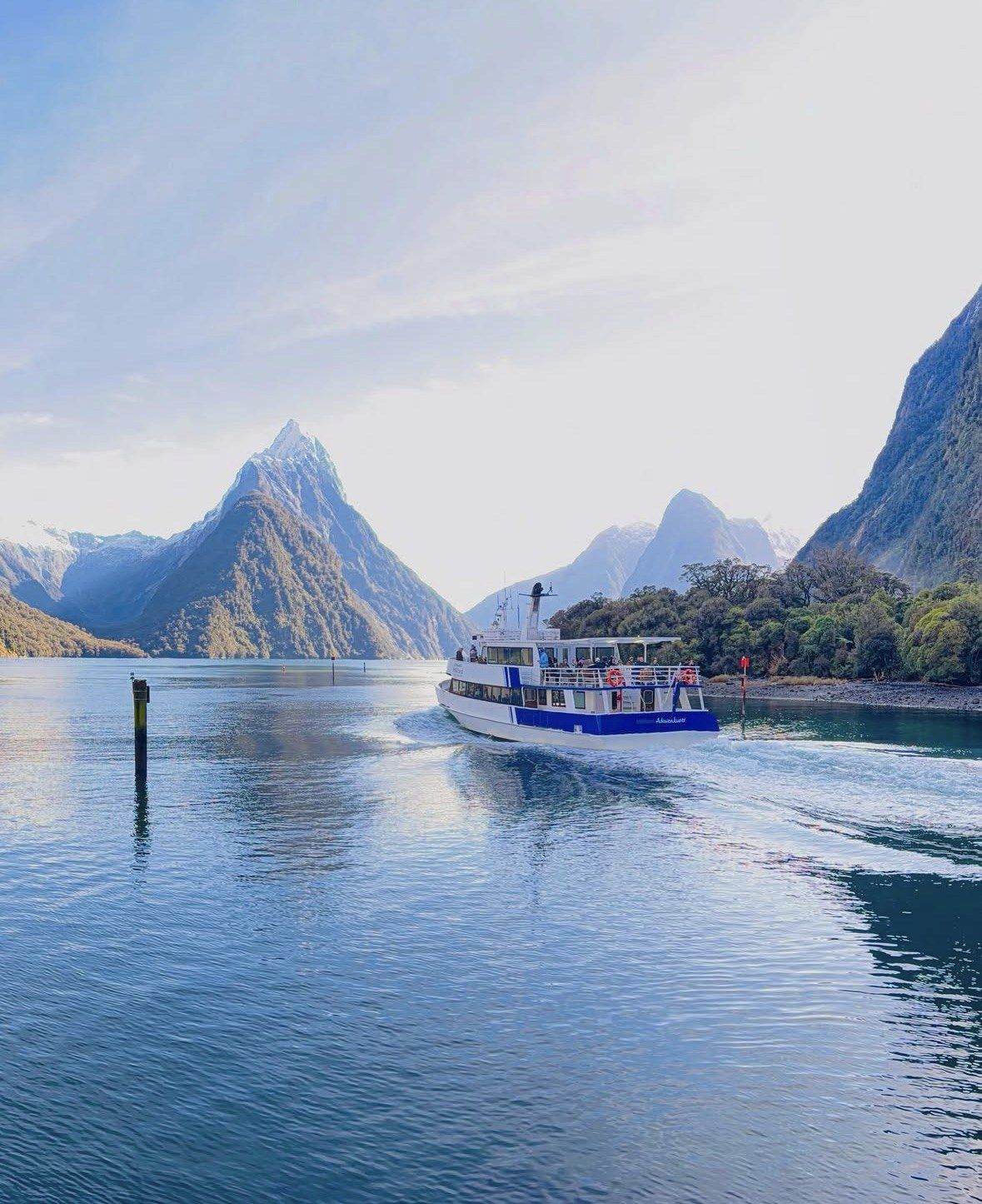
From NZ$189, rated 4.9 (3,254 reviews): 1 hour 45 minutes on the fiord, coffee, tea and biscuits served on board, and open deck to use once the shell and overtrousers are on.
★ 4.9/5 · 3,254 reviews
Season by season on the deck
DOC splits the Milford Road year in two: October to April, the busy summer stretch, and May to September, winter, when the surface can be snow-covered and icy and chains may be required. Pack to that split, with one caveat: avalanches, rockfall and landslides are a concern from May to November, and the Milford Road Alliance monitors the route around the clock.
The shell and the mid layer travel with you all year. What changes is the thickness underneath, and whether a hat and gloves come too.
| Season | Road and conditions | What to wear on the water |
|---|
| Summer (October to April, DOC's busy season) | Traffic signals control the single-lane Homer Tunnel through the peak, so allow for a wait of up to 20 minutes each way | Hooded waterproof shell over a light fleece, sunglasses, sunscreen, closed shoes with grip |
|---|
| Autumn (still inside the October to April season) | The road hazard window opens in May, so chains can come into play late in the season | Shell over a thicker wool or fleece mid layer, warm hat kept in the day bag |
|---|
| Winter (DOC's May to September) | Snow and ice possible on State Highway 94, chains may be required, monitoring runs 24 hours a day | Thermal base layer, wool mid layer, hooded shell, overtrousers, hat, gloves, warm socks |
|---|
| Spring (hazard window runs to November, busy season restarts in October) | Closures and chain requirements stay possible into November while coach numbers build again | Winter layers in early spring, a lighter mid layer later, hat and gloves until the hazard window closes |
|---|
Milford Sound packing list for the day bag
Between Te Anau and Milford Sound there are no shops and no petrol stations, and the only toilets on the whole route are at Te Anau, Knobs Flat and Milford Sound itself. Anything you want during the drive or the sailing leaves town with you, so pack the bag the night before: it is 120 km with nowhere to top up.
Motion-sickness tablets deserve a line of their own. Most of the fiord is sheltered, but it opens to the Tasman Sea at the mouth, and sailings that run down towards the entrance meet the swell coming in. Tablets work before you board rather than after, so take them with breakfast if you know you are sensitive.
Check food and water against your ticket. The boutique cruise listed on this site includes coffee, tea and biscuits and sells no food on board, which is fine across 1 hour 45 minutes and thin if you skipped lunch. A reusable bottle saves you buying one and then carrying it home.
- Water in a reusable bottle, filled before you leave town
- Snacks that survive a day bag, since nothing is sold along the route
- Motion-sickness tablets, swallowed before you board
- A dry bag, or at least a plastic one, for the camera, and a cloth for the lens: spray lands on glass constantly
- Phone charged, with offline maps and your booking downloaded, because mobile coverage along the Milford Road is very limited and phones sit only at Knobs Flat, the Homer Tunnel for emergencies and Milford Sound
- A warm spare layer and dry socks left in the car for the drive back
- A debit or credit card: on a cruise-only booking the main car park is a not-included item at NZ$10 per hour, charged at machines that take no cash and print no receipts
- A small bag for your own rubbish, since all waste has to be carried out
Rules that change what goes in the bag
Leave the drone at home. Drones are prohibited in Piopiotahi Milford Sound and throughout Fiordland National Park, so one in your luggage is dead weight for the whole Fiordland leg of a trip. A camera and a long lens do more work here, with rock walls that run 1,692 m above the water and continue to depths of up to about 265 m below it.
Rubbish is the other packing rule with consequences. All waste must be carried out, and with toilets at only those three points on the route, a bag for wrappers, fruit skins and nappies counts as equipment. Your food is also the reason the birds come close: feeding kea is banned because it harms them, and DOC logged five killed by vehicles on the Milford Road between 3 April and 14 June 2024, three of them at Monkey Creek. Keep the snack bag shut when you stop at the pull-offs.
Dogs are not allowed anywhere in Fiordland National Park, including the Milford Road corridor, so the drive is not one to bring a dog on.
Packing so the booked sailing works in any weather
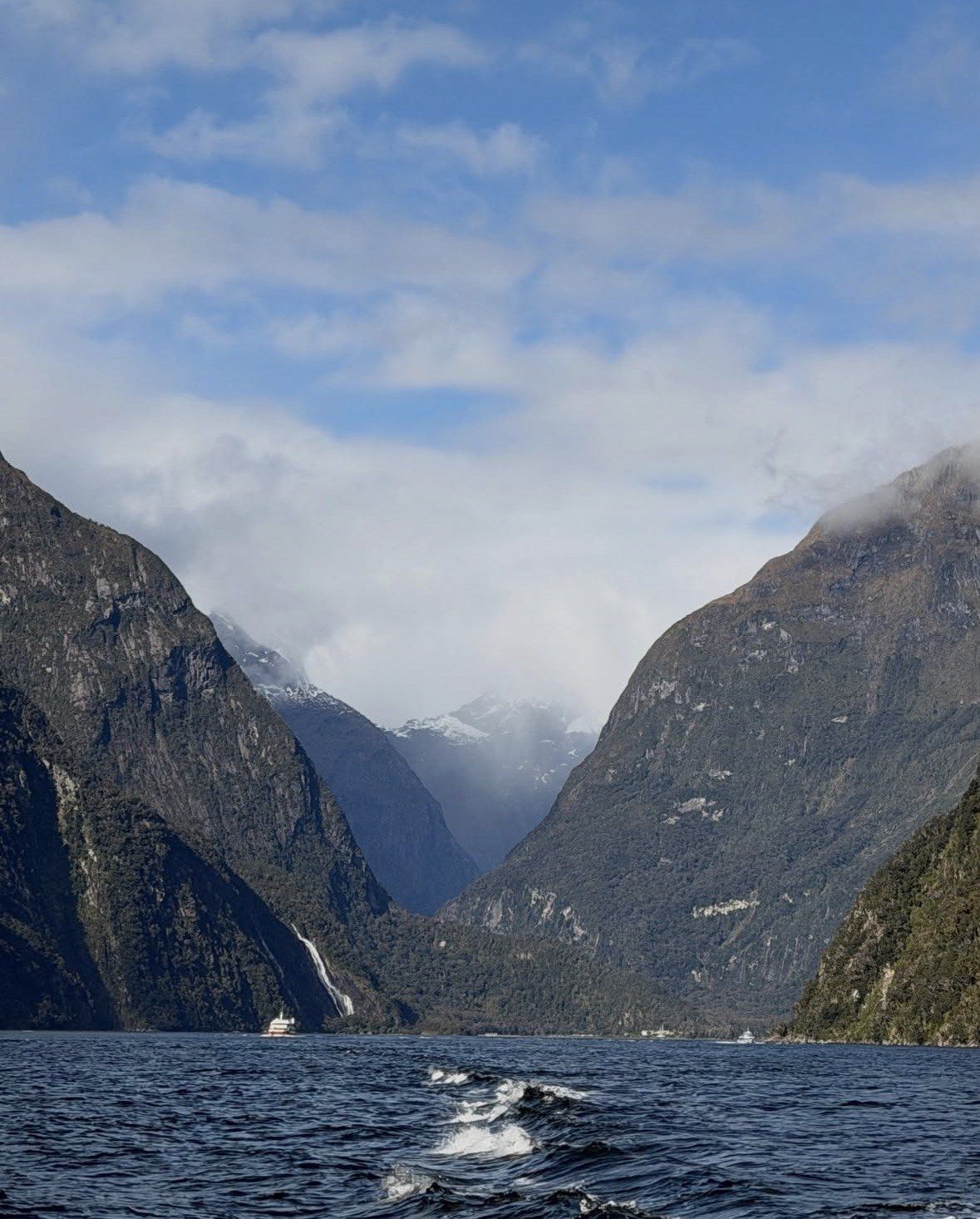
Go on the wet day. Heavy rain switches on the hundreds of temporary falls that stripe the rock between the permanent ones, and with an annual average above 7 metres, holding out for a dry forecast mostly means not sailing at all. Pack the hard shell and count the rain as the reason you came.
The thing that actually ends a Milford day is a road closure. Avalanches, rockfall and landslides all affect State Highway 94, particularly between May and November, when it can shut or call for snow chains. Check the road status the afternoon before, while you can still act on it: the boutique cruise on this site can be cancelled at no cost up to 24 hours before departure.
Staying on the water overnight lengthens the list. The Mariner overnight cruise runs 2 days with private cabins and en suite bathrooms, dinner and breakfast, and use of kayaks or tender boats, so bring clothes you do not mind soaking plus something dry and warm for the evening deck. Check-in is 30 minutes before departure, check-in closes 15 minutes before and the gates 5 minutes before, and these overnight sailings are sold on final-sale terms. Whatever you leave in the car stays there until morning: overnight vehicles go in the coach park from 3:30pm at a flat NZ$30, and must be collected by 11am the next day.
Questions people ask
Do I need a raincoat in Milford Sound, or will an umbrella do?
Take the raincoat. An umbrella is awkward on a moving deck and in a crowded doorway, and the gusts that come down the rock faces turn it inside out. A hood you can cinch leaves both hands free for the rail and the camera.
Will my phone work at the terminal for tickets and maps?
Coverage drops away for most of the Milford Road, and the phones on the route sit at Knobs Flat, at the Homer Tunnel for emergency use, and at Milford Sound. Download your booking confirmation and offline maps before you leave Te Anau, and set off with the phone fully charged.
Can I bring my dog on the drive and leave it in the car?
No. The ban on dogs covers all of Fiordland National Park, the Milford Road corridor and the fiord included. Arrange accommodation or care for the animal outside the park before you set off.
What should I pack differently for the overnight cruise?
Add clothes you are happy to soak for the kayaks or tender boats, plus a dry warm layer for standing on deck after dinner. The Mariner overnight cruise runs 2 days from NZ$1,398, rated 4.7 (167 reviews), with private cabins and en suite bathrooms, dinner and breakfast included. Check in 30 minutes before departure, and note that these sailings are sold on final-sale terms.
Is sunscreen really needed if the forecast says rain?
Yes. The weather in the fiord is localised and moves fast, so a grey morning can hand you strong glare off the water by the time you reach the entrance. Sunscreen and sunglasses weigh almost nothing, and without them you squint through the best stretch of the sailing.
Read also