In shortAny month works, but they are not the same day out. DOC splits the Milford Road year in two: October to April is its busy season, May to September its winter, when the surface can be snow-covered and icy and chains may be required, and the broader window for closures and chain conditions runs from May to November. For long daylight and full sailing schedules choose late summer; for quiet, choose April.
Over 7 metresaverage rainfall a year
October to AprilDOC's busy summer season
May to Novemberclosure and chain window
Up to 20 minutesHomer Tunnel signal delay
The best time to visit Milford Sound, month by month
Book February if you want long evenings, warm water-level light and the widest choice of sailings. Book April if you want the same fiord with fewer people between you and the rail. DOC draws the line simply: October to April is the busy summer season on the Milford Road, and May to September is winter, when the road can be snow-covered and icy and snow chains may be required.
The road and the timetable decide how crowded a day feels. More than a million visitors a year reach Milford Sound (Piopiotahi), and DOC records numbers climbing from about 437,000 in 2012 to 883,000 in 2018. They all arrive on one road, State Highway 94, and check in at one building, the Milford Sound Visitor Terminal. Milford Sound Tourism, which manages the terminal, the wharves and the car parks, advises being on the Milford Road before 8am or after 11am in any month, or sleeping somewhere nearby.
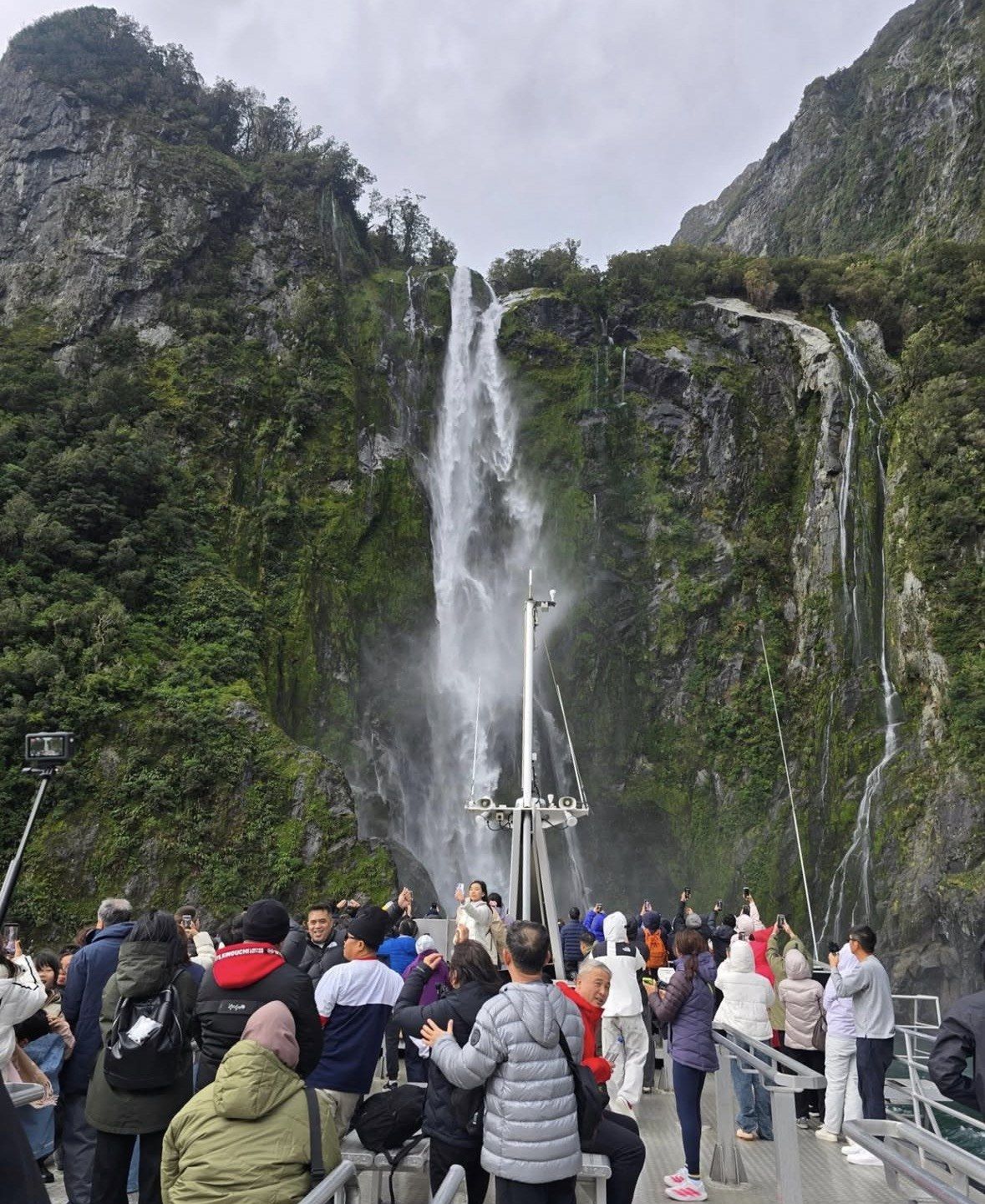
Rain falls in every month here. Rainfall averages over 7 metres a year, so picking a month to stay dry is wasted effort, and heavy rain is when hundreds of temporary falls appear on the rock. The variable worth planning around is access: the Milford Road is prone to avalanches, rockfall and landslides, and may close or require chains particularly from May to November. The Milford Road Alliance monitors it around the clock, and conditions change day to day, so check the status the morning you travel.
| Season | Daylight and pace | Road and wharf | Waterfalls | Closures and chains |
|---|
| Summer, December to February | Longest days, full sailing schedules | Busiest: inside DOC's October to April season, Homer Tunnel on signals with delays up to 20 minutes each way | Permanent falls, plus temporary falls whenever it rains | Closures unlikely, outside the May to November window |
|---|
| Autumn, March to April | Shortening days, settled light, still inside the busy season to the end of April | Noticeably thinner on the road and at the terminal through April | Dependable in autumn: over 7 metres of annual rain keeps them running | Clear of the chain window until May |
|---|
| Winter, May to September | Short days, snow on the peaks, crisp clear spells between fronts | Quietest of the year on the road and at the wharves | Fed by rain rather than melt; falls still run after a front | Core of the May to November window: possible closures, chains may be required |
|---|
| Spring, September to November | Daylight stretching again, busy season restarting from October | Building through October and November as coaches return | Strongest flow: snowmelt off the peaks on top of the rain | Still inside the May to November window until it closes |
|---|
Milford Sound in summer: December to February
Summer buys you time. Long evenings mean an early sailing still leaves most of the day for the road stops on the way back, and the full timetable means you can choose a departure instead of taking whatever is left. It also buys you company. This is the heart of DOC's October to April season, and the midday block at the terminal is when the Queenstown coach fleet lands.
Plan the morning around two chokepoints. The single-lane Homer Tunnel runs on traffic signals through the summer peak, and a red light can hold you for up to 20 minutes in either direction. The second is the car park: in peak season Milford Sound Tourism's own planning figure is up to 45 minutes to get parked, then about a 15-minute walk to the Visitor Terminal, and that sits on top of a check-in desk that closes 20 to 30 minutes before the sailing. On a cruise-only booking the main car park is a separate line item in summer, NZ$10 per hour, settled by card at the machines because they accept nothing else.
Summer is also when the walking combinations run. The Milford Track, which finishes with a boat ride into the fiord, has a Great Walks season from 1 November 2026 to 30 April 2027, with huts booked well ahead inside it, and the road-stop walks along State Highway 94 are at their most straightforward while the hazard window is closed. If you are starting in Queenstown, note that the drive back is 600 km and 12 to 14 hours in total, which is why DOC suggests basing yourself in Te Anau, 120 km and about two hours from the terminal.
Boutique sailing, any season
Pick any month and this one is on the water: a 1 hour 45 minute boutique cruise, from NZ$189, rated 4.9 (3,254 reviews), sailing every day of the year apart from Christmas Day, with coffee, tea and biscuits on board and cancellation free up to 24 hours before departure if the weather changes your plans.
★ 4.9/5 · 3,254 reviews
Autumn is the month most people should book
March and April give you the summer machinery without the summer queue. The busy season runs to the end of April on DOC's reckoning, so sailings and tours are still operating normally, and the chain and closure window has not opened. Days are shorter than in January but long enough for the 240 km round trip from Te Anau, for which DOC advises allowing around eight hours with scenic stops, a short walk and a cruise.
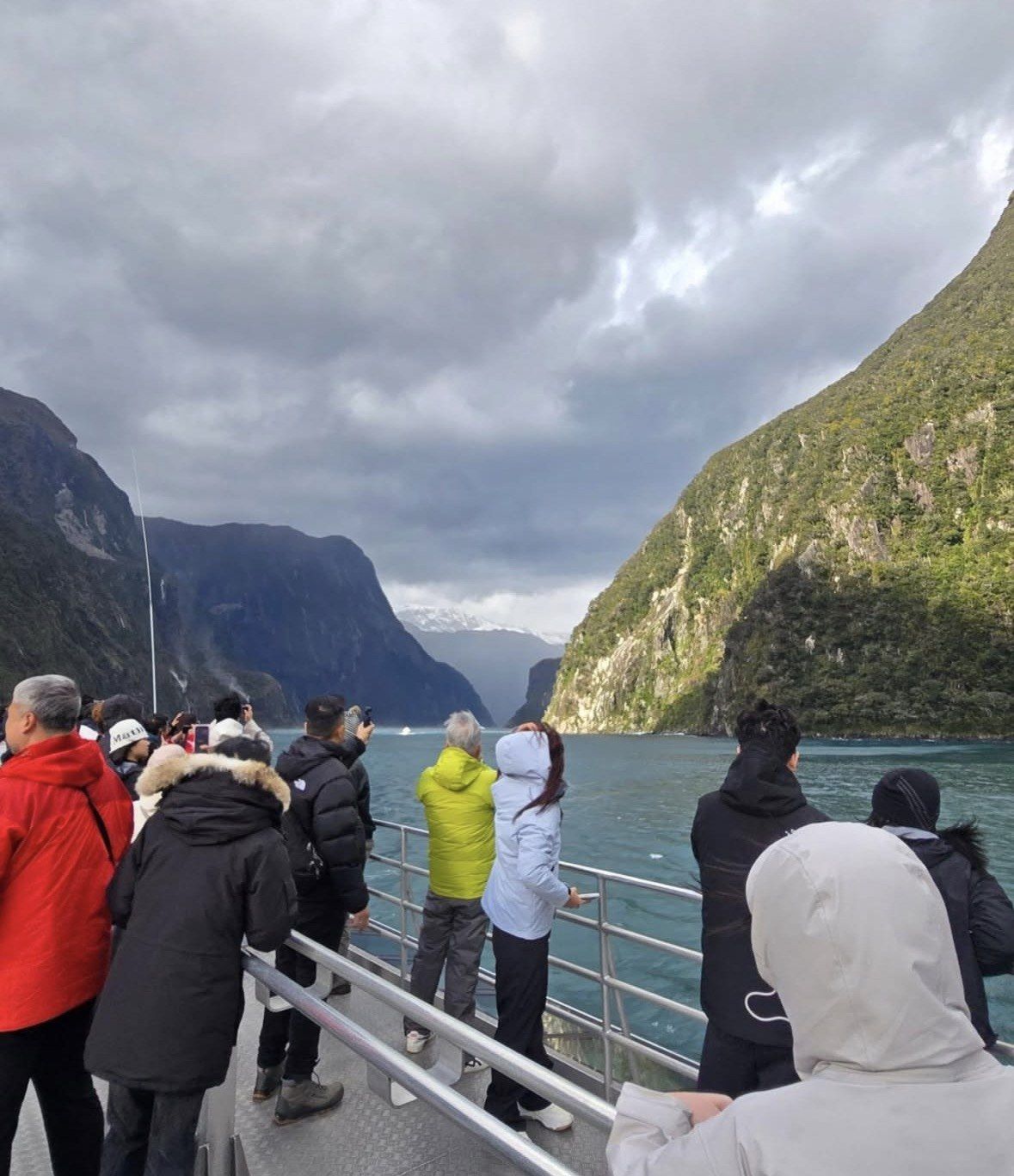
Light is the practical gain. The fiord works like a corridor with very high sides, with Mitre Peak rising 1,692 m straight out of the water and the walls continuing to depths of up to about 265 m, so the sun reaches the water for a narrower slot than the sky suggests. Lower autumn sun and calmer mornings tend to suit both photographs and the Mirror Lakes boardwalk, about 56 km north of Te Anau, where reflections hold until the wind picks up.
Two dates matter at the end of April. The Great Walks season closes on 30 April 2027, and from May the road hazard window opens, which together thin out guided walking options and some tour combinations. If a walk along the Milford Road is part of your plan, book it in April rather than May.
Winter: clear spells, snow on the peaks, and the chain season
Winter is the off season for a reason, and it rewards travellers who accept the trade. Days are short, so there is no slack in the schedule between leaving Te Anau and checking in at the terminal. In return the road and wharves are at their emptiest of the year, the peaks hold snow, and the clear spells between fronts are the crispest light the fiord gets.
DOC calls May to September winter on the Milford Road, when it can be snow-covered and icy and snow chains may be required. The wider hazard window runs from May to November for avalanches, rockfall, landslides, closures and chains. Carry chains and know how to fit them if you are driving yourself, fuel up in Te Anau for the whole 240 km because nothing between there and the fiord sells petrol, and expect very limited mobile coverage, with phones at Knobs Flat, the Homer Tunnel for emergencies and Milford Sound.
In winter a packaged coach or small-group day is the sensible way to do this: the operator drives the alpine road, watches the conditions and reorganises the day if the road shuts. Winter timetables are thinner than the summer ones published for each operator, so confirm sailing times for your date rather than assuming a summer schedule. The boutique sailing listed on this site runs every day of the year, excluding Christmas Day, which makes a mid-winter booking straightforward.
Toilets on the whole route exist only at Te Anau, Knobs Flat and Milford Sound, and that matters more in winter when stops are brief and daylight is limited.
Spring brings the strongest waterfall flow
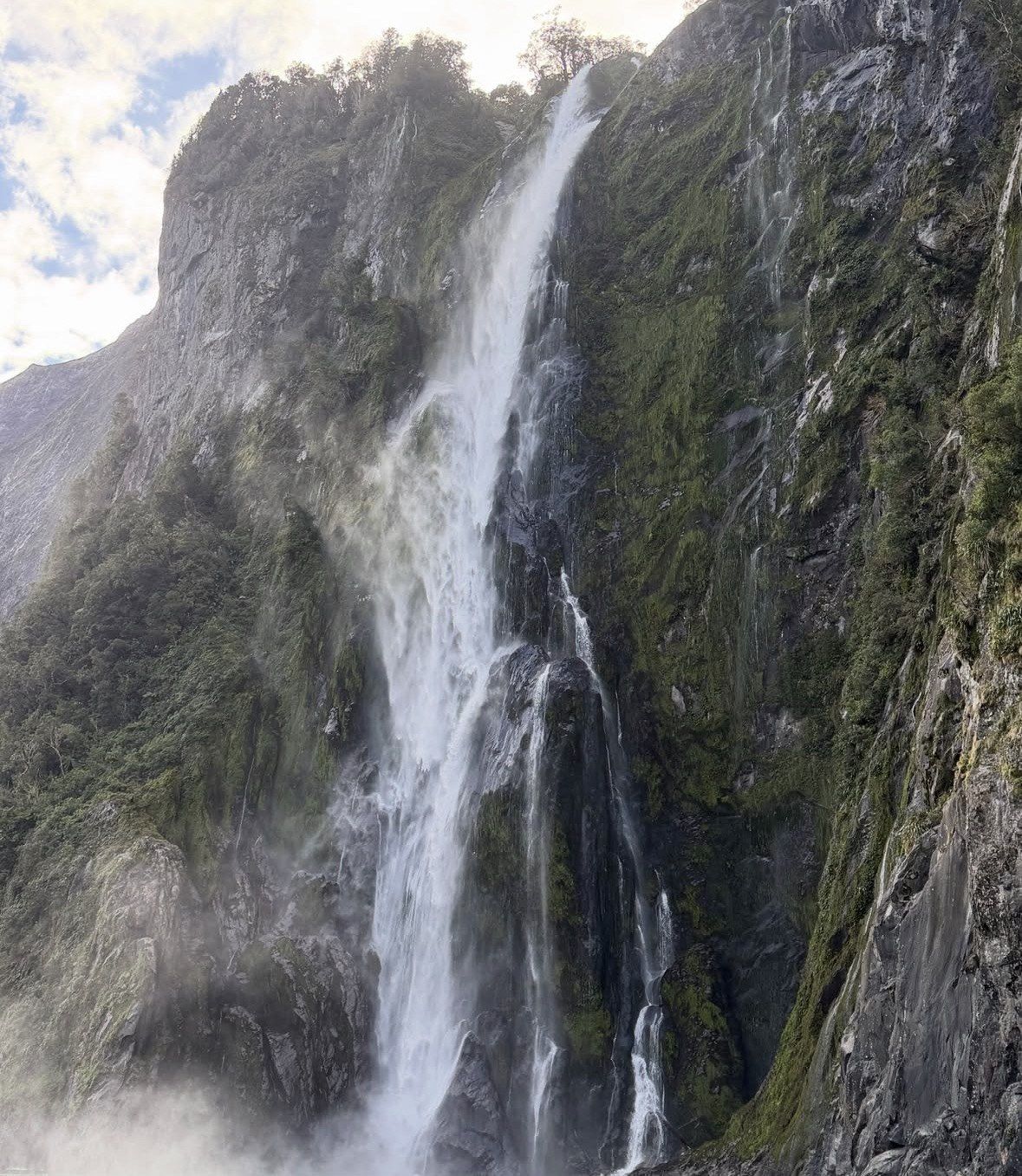
September to November is when the walls run hardest. Snow coming off the peaks adds to a place that already averages over 7 metres of rain a year, so the permanent falls are at full volume and a wet spell switches on the temporary ones along the whole fiord. If waterfalls are the reason you are coming, this is the window.
The catch is access. The May to November hazard period covers all of spring, so closures and chain requirements remain possible into November, and from October the busy season restarts: coach numbers build, and the Homer Tunnel goes back onto signals through the peak with delays of up to 20 minutes each way. The Great Walks season on the Milford Track opens on 1 November 2026, which is when walking combinations come back onto the board.
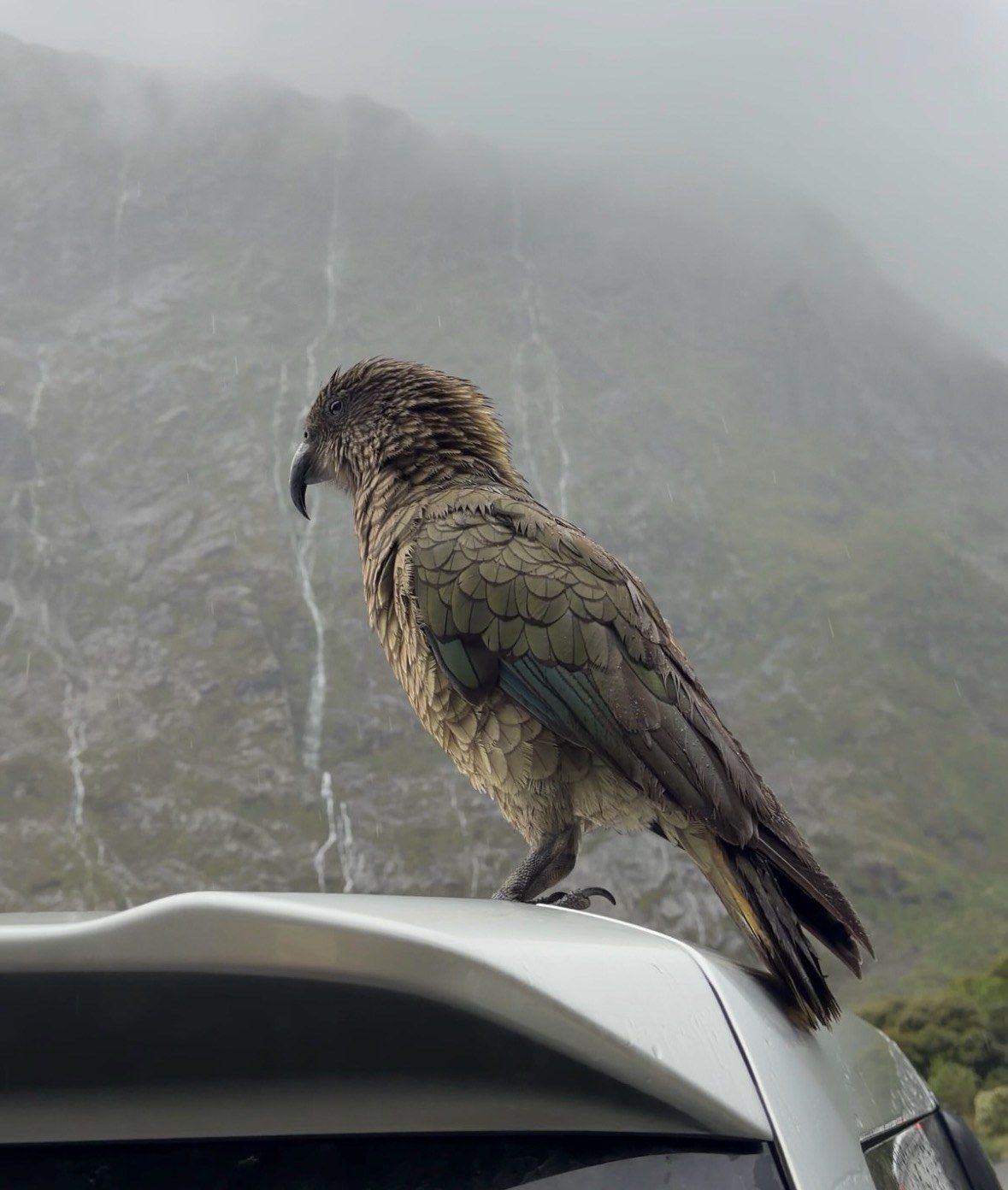
Spring is also the only time humpback whales turn up, and rarely, in October and November on their migration. Seasonality does not apply to fur seals, bottlenose dolphins or kea, which are sighted in every month of the year. DOC asks visitors not to approach marine mammals or penguins, and feeding kea is prohibited, with vehicle strikes recorded at roadside stops such as Monkey Creek.
Pick your month, then pick your departure
Once the month is settled, the time of day matters more than the season. Milford Sound Tourism's road advice, before 8am or after 11am, tells you exactly where the crowd sits: the sailings leaving late morning and early afternoon absorb the coach arrivals, and the first and last departures of the day are the quiet ones.
A simple way to decide:
- February: long daylight, every sailing running, busiest road and terminal. Take the earliest departure you can and build in slack for the tunnel signals.
- April: the balance pick. Full services, thinner crowds, no chain window yet, and the last month of the Great Walks season.
- June to August: emptiest fiord and snow on the peaks. Hand the driving to a coach or small-group operator and confirm sailing times for your date.
- October and November: biggest waterfall flow, with the hazard window still open and the coach season rebuilding.
- Any month: pack a hard shell rather than an umbrella, and let the road status rather than the forecast decide whether you travel.
Questions people ask
Does it rain every month at Milford Sound?
Close to it. Rainfall averages over 7 metres a year, which makes Milford Sound one of New Zealand's wettest places, so rain gear is needed in any season. Rain is also what puts hundreds of temporary waterfalls on the rock walls, so a wet sailing usually has more to look at. Waiting for a clear day generally means not going at all.
Can the Milford Road close in summer?
It can. The road is prone to avalanches, rockfall and landslides at any time, although closures and chain requirements are concentrated from May to November. Monitoring runs 24 hours a day under the Milford Road Alliance. Live status changes daily, so check conditions on the morning you travel rather than relying on the season.
When can you see penguins in Milford Sound?
The window for tawaki, the Fiordland crested penguin, runs from July to December, when the birds come ashore at their landing beaches and are often heard before they are spotted. Chicks fledge at about 75 days old in late November or early December, and successful breeders return in late January or early February to moult for about three weeks. The species is classed as 'Declining', and DOC asks visitors not to approach penguins or marine mammals.
Is a day trip from Queenstown a bad idea in winter?
Winter does not make the trip longer so much as tighter. The return distance is 600 km and 12 to 14 hours whatever the month, a coach leg runs about five hours each way, and DOC's suggestion to base yourself in Te Anau holds all year. Inside the May to November window a packaged coach or small-group day makes more sense than self-driving, because the operator handles the alpine road and the conditions. Pickups on the 13-hour small-group day run at 6:30am or 7:00am.
Which season needs the most time built into the schedule?
Summer, because of traffic. The single-lane Homer Tunnel runs on signals through the peak with delays of up to 20 minutes each way, and Milford Sound Tourism asks drivers to allow up to 45 minutes for parking plus roughly a 15-minute walk to the Visitor Terminal. The desk then shuts 20 to 30 minutes ahead of the sailing, depending on which boat you are on, and no summer schedule shortens that.
Read also